By Azura · Updated August 2026 · Raised Garden Hub is reader-supported. When you buy through links on our site, we may earn an affiliate commission at no extra cost to you.
A raised garden bed can improve drainage, access, and control over the growing mix. These picks are based on current product specifications, written warranty terms, Extension guidance, and use-case fit. We have not yet hands-on tested the products on this page.
Page updated August 10, 2026 — cited specifications, direct prices, and warranties rechecked the same day.
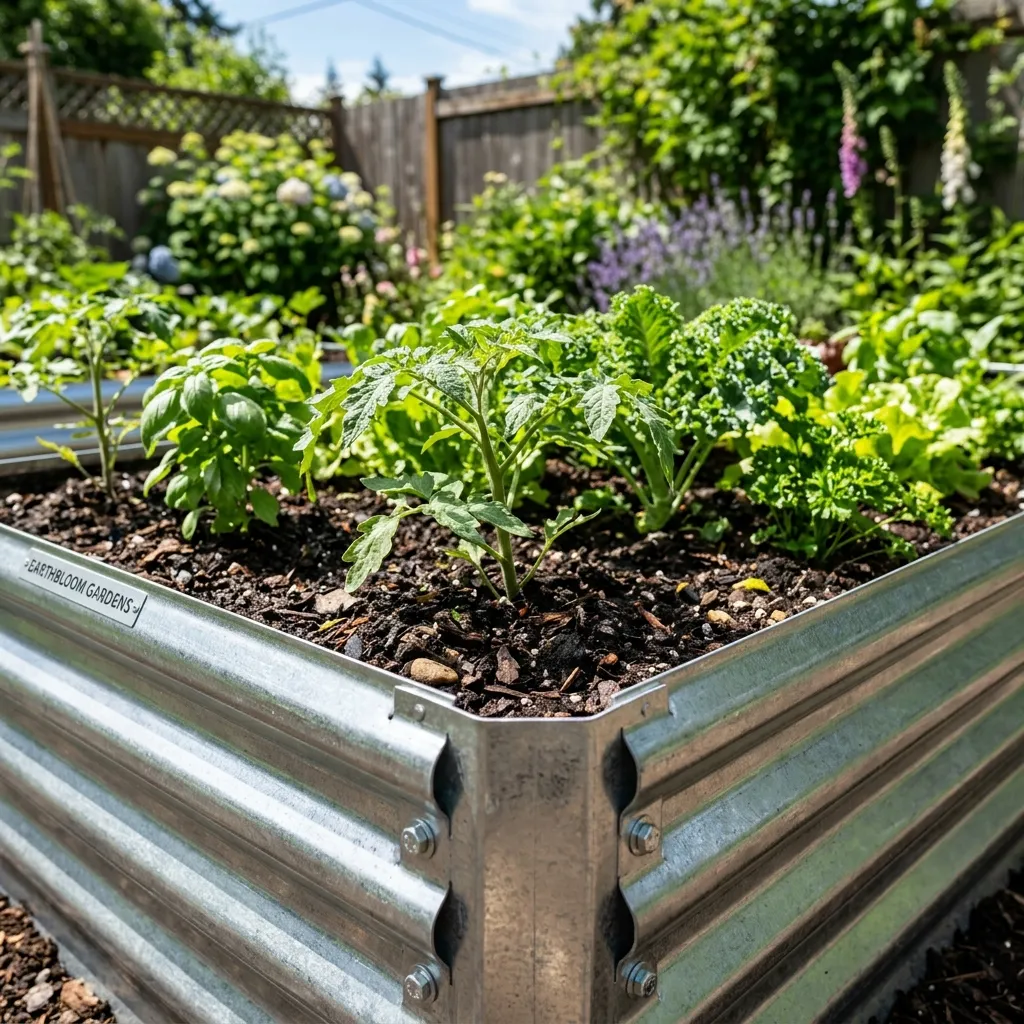
Quick verdict: For most people, a 17-inch galvanized metal bed is the best buy — the Vego kit checked here uses a bolt-together 0.6 mm panel system and offers nine layouts.
Buy Vego if you want the broadest reviewed accessory and configuration system. Avoid it if a tall frame makes the soil and delivery budget too high; compare a lower Land Guard frame, cedar kit, or elevated planter for the actual site. Product facts and written warranties were checked July 21, 2026; live prices and availability can change.
Vego Garden 17in 9-in-1 Modular Metal Raised Bed
- 17in height reduces bending
- Published 0.6 mm coated-steel panels
- Nine layouts in the compared kit
- Large size/accessory ecosystem
- Premium price
- Tall bed needs more soil to fill
Product facts are manufacturer- or retailer-published unless this page documents a Raised Garden Hub measurement. Confirm the exact model, live price, and terms before buying.
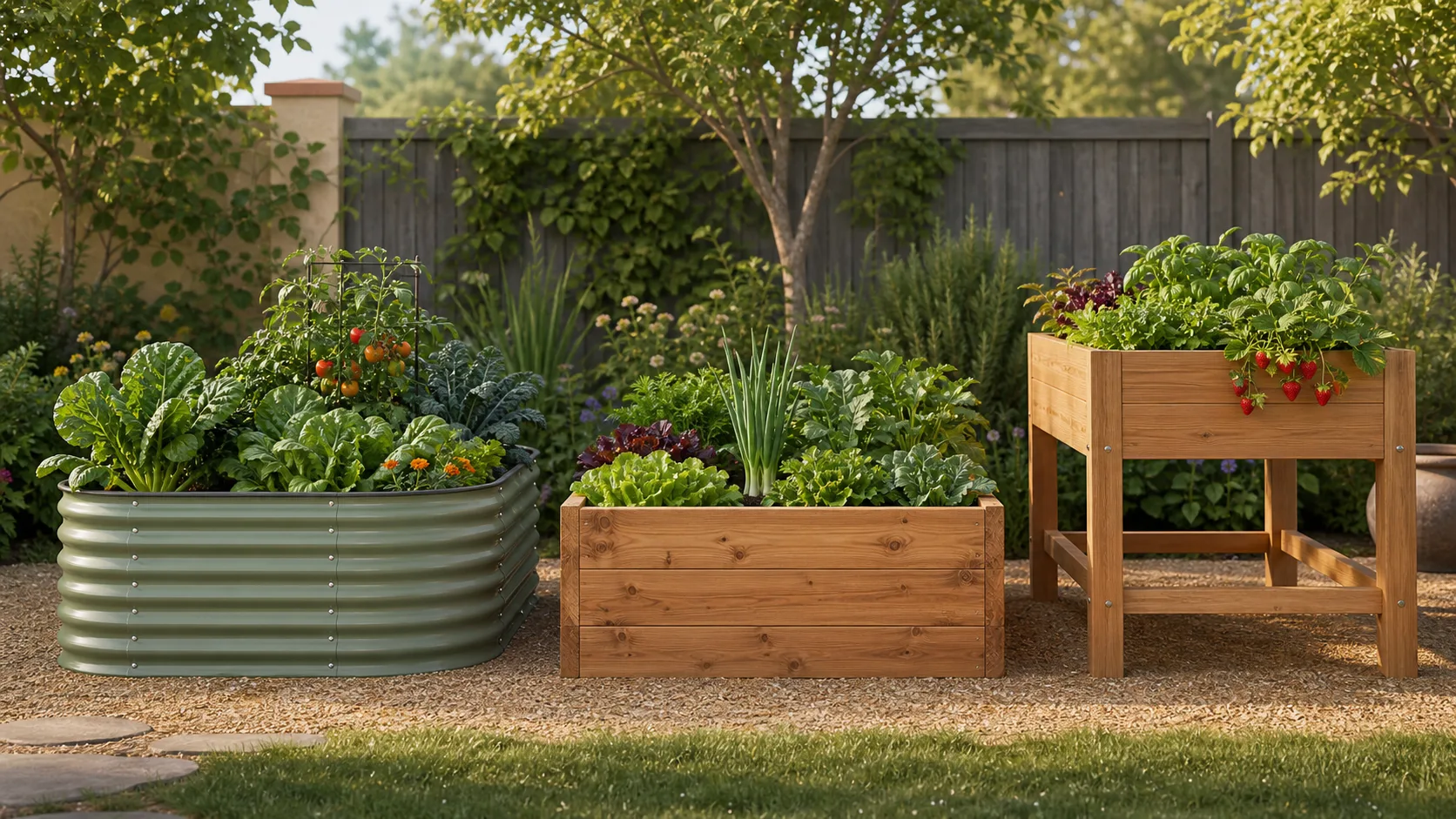
Best raised garden beds at a glance
| Pick | Best for | Material / structure | Size checked | Written warranty | Price | Evidence |
|---|---|---|---|---|---|---|
| Vego Garden 17” | Best ecosystem | 0.6 mm Zn-Al-Mg-coated steel | 17”; 9 layouts | 2-year limited | $130–$200 | Source record; research-based |
| Birdies 15” | Best current area value | 24 ga / 0.50 mm BMT; internal brace | 15”; 6 layouts | US direct policy: limited lifetime; years 1–5 non-prorated | $139 direct checked | Source record; research-based |
| Land Guard 8×4 | Best budget | Approx. 0.4 mm galvanized sheet | 8×4×1 ft family | Verify exact listing | $60–$90 | Source record; research-based |
| Greenes Fence Cedar | Best wood kit | 3/4-inch North American cedar boards | 4×8×10.5 in | Verify current term | $70–$180 | Source record; research-based |
| Elevated planter | Small spaces / less bending | Model-specific | Verify root volume and load | Model-specific | $80–$160 | Exact model required; research-based |
Prices move with size and stock — tap any Check price button below for the live number.
Original metal-kit normalization — August 10 snapshot
| Checked direct offer | Long layout used | Frame price | Frame $ / nominal ft² | Frame $ / nominal ft³ |
|---|---|---|---|---|
| Birdies 15” | 7×2 ft | $139.00 | $9.93 | $7.94 |
| Vegega 17” | 8×2 ft | $169.90 lowest color | $10.62 | $7.49 |
| Vego 17” | 8×2 ft | $179.95 | $11.25 | $7.94 |
Area = length × width; nominal capacity = area × listed wall height ÷ 12. This reproducible frame-only check uses listed dimensions and excludes soil, delivery, tax, and accessories. It is not a hands-on inside-dimension measurement. See every source, warranty band, formula, and CSV. The Birdies snapshot is a US direct-store comparison; verify original-purchaser and seller eligibility before applying that policy to a marketplace order.
Check the current Vego 17-inch price →What to look for in a raised garden bed
Before the picks, four things decide whether you’ll be happy two seasons from now:
- Usable root zone. Match the crop and cultivar, then distinguish an open-bottom frame over healthy soil from a contained planter on concrete. Carrot types have different mature root lengths, potatoes are hilled in stages, and contained tomatoes need enough total volume. See how to choose raised-bed size.
- Material. Coated steel avoids biological rot and regular sealing, while cedar is easy to modify and replace board by board. Avoid universal lifespan and temperature claims: species, coating, board thickness, drainage, climate, color, mulch, and maintenance all matter. Still torn? Our in-depth metal vs wood raised garden beds comparison walks through the trade-offs side by side.
- Width. Keep beds 4 feet wide or less so you can reach the center from either side without stepping in. Compacted soil is the enemy of root growth. For the full rundown on depth, width, and length together, see our best size for a raised garden bed guide.
- Thickness, corrugation, and bracing. Compare published millimeters instead of vague “heavy-duty” language. A thinner corrugated and internally braced wall can be more stable than a flat unsupported wall; the coating and exposed edges affect corrosion separately.
If you’re comparing the two most popular metal brands, jump straight to Vego vs Birdies or Vego vs Vegega. Want all three side by side, or a lower-priced modular alternative? See our Vego vs Vegega vs Birdies comparison or the Olle Gardens review.
Best overall — Vego Garden 17” Modular Metal Bed
The 17-inch Vego is our research-based overall pick. The compared 9-in-1 kit publishes 0.6 mm Zn-Al-Mg-coated panels, stainless hardware, an included hand wrench, and nine layouts. Vego’s current written warranty is two years; its 20+ year service-life statement is a separate manufacturer claim and not our test result.
The 17-inch open-bottom format is flexible for mixed crops, but the crop, cultivar, soil below, and fill volume still decide suitability. Assembly is bolt-and-nut, not tool-free; the official estimate is about 40 minutes and the hand wrench is included. The broader height, configuration, and accessory ecosystem is why it earns the top spot here—not an unverified cost-per-year calculation.
Deciding between the two big metal brands? See our full breakdown: Vego vs Birdies raised garden beds. Shopping on a tighter budget and considering a third option? Vego vs Vegega compares the premium and the value pick head to head. You might also want to compare all-metal options side by side in our best metal raised garden beds roundup.
Best budget — Land Guard Galvanized Bed (8×4×1 ft)
If you want a large footprint at a lower upfront price, Land Guard is worth comparing. Its current FAQ lists approximately 0.4 mm panel sheet with folded edges around 0.8 mm; exact dimensions, bracing, warranty, and price vary by model.
A 12-inch open-bottom frame over loose native soil behaves differently from a contained planter on concrete. Match carrots to their mature root length; potatoes are planted shallow and then hilled. Do not stack unmatched kits unless the manufacturer explicitly supports that assembly, and do not infer corrosion timing from thickness alone.
Before you fill it, run the numbers with our raised bed soil calculator — an 8×4×1-foot bed needs roughly 32 cubic feet of mix, and bags add up fast. Read our guide on how to fill a raised garden bed before choosing full-depth fill or a documented lower-layer scenario.
Land Guard Galvanized Raised Garden Bed 8x4x1ft
- Large-footprint models available
- Low upfront-price options
- Open-bottom formats available
- Published FAQ lists panel and folded-edge thickness
- Specifications vary by model
- Contained 12in format limits root volume on hardscape
- Verify brace, warranty, and delivered price
Product facts are manufacturer- or retailer-published unless this page documents a Raised Garden Hub measurement. Confirm the exact model, live price, and terms before buying.
Best wood — Greenes Fence Cedar Raised Bed
Prefer the natural look? Greenes Fence cedar kits use naturally decay-resistant cedar and dovetail together without tools — no screws, no hardware. Cedar is genuinely rot-resistant (not rot-proof) and contains natural extractives that slow decay, but it still breaks down over time. Actual service life depends on species, board thickness, climate, drainage, and soil contact.
The clearest advantages of cedar are its natural appearance and DIY repairability. We have not run a controlled metal-versus-wood soil-temperature test, so we do not assign a universal heat winner. If the visual warmth of wood in your backyard is important to you, cedar is the right call—just expect to inspect and eventually replace biodegradable boards. See how it stacks up against metal in our metal vs wood raised garden beds guide, and every cedar pick in the dedicated best cedar raised garden beds roundup.
Greenes Fence Cedar Raised Garden Bed
- Naturally decay-resistant cedar
- Tool-free dovetail assembly
- Individual boards are easy to replace
- Natural look for patios and formal gardens
- Biodegradable in wet soil contact
- Service life varies by site and board thickness
- May need periodic surface maintenance
Product facts are manufacturer- or retailer-published unless this page documents a Raised Garden Hub measurement. Confirm the exact model, live price, and terms before buying.
Best for small spaces — Elevated Raised Bed
On a balcony, patio, or if bending is hard, an elevated bed on legs brings the soil up to waist height. You lose some root depth (most hold 8–10 inches of soil), so stick to lettuce, herbs, peppers, and bush beans rather than deep root crops.
Elevated Raised Garden Bed (Standing Planter)
- Raised working height
- Can suit verified patio or balcony setups
- Some models include controlled drainage
- Shallow soil — no deep root crops
- Smaller total growing area
Product facts are manufacturer- or retailer-published unless this page documents a Raised Garden Hub measurement. Confirm the exact model, live price, and terms before buying.
Want the full shortlist for tight spaces? See our best elevated raised beds and best beds for small spaces.
Growing one crop in particular? We have bed guides for strawberries, tomatoes, and carrots and root vegetables — and a self-watering bed guide if you’d rather not water every day.
How much soil will you need?
Soil is often the biggest hidden cost of a new raised bed — and the one most buyers forget to budget for. A standard 4×8 bed at 12 inches deep needs roughly 32 cubic feet of mix (about 1.2 cubic yards). Step up to a 17-inch-deep Vego and that same footprint needs 45 cubic feet. Bags of premium raised bed mix run $8–$15 each at roughly 1–2 cubic feet per bag, so a single deep bed can cost $150–$300 in soil alone.
Before you buy your bed, run the numbers with our free raised bed soil calculator to avoid sticker shock at the garden center. Then read our guide on how to fill a raised garden bed for budget-friendly strategies. Very tall beds can use a documented layered approach, but keep an adequate top root zone of quality mineral soil and compost, expect organic fill to settle, and do not assume that every crop or site benefits from a fixed “bottom third” rule.
For the actual purchase decision, use the raised-bed total-cost calculator. It adds the frame, soil, delivery, and accessories and reports cost per square foot, so a low frame price cannot hide a more expensive complete project.
How to decide — a 30-second pick
- Want the broadest reviewed configuration/accessory system? Compare the Vego 17” kit.
- On a tight budget or covering a big area? Compare the exact Land Guard model, brace, and delivered price.
- Want a natural patio look? Go Greenes cedar, and accept a shorter lifespan.
- Want a pre-cut system with no lumber shopping? Compare the exact contents and delivered price in our raised garden bed kit guide.
- Want a non-wood look with replaceable components? Review the published material and warranty for a Frame It All composite bed.
- Short on space or can’t bend? Choose an elevated standing bed.
- Gardening in a hot climate? Choose from color, soil volume, mulch, and irrigation; this page does not award a heat winner without a comparable physical temperature test.
Still unsure between the two most popular materials? Read our full breakdown: Metal vs Wood Raised Garden Beds. New to all of this? Start with raised bed gardening for beginners.
Frequently asked questions
What is the best raised garden bed in 2026?
For most gardeners, the Vego Garden 17-inch modular bed is our research-based overall pick because its compared kit publishes 0.6 mm coated-steel panels, nine configurations, a roughly 40-minute assembly estimate, and a broad accessory ecosystem. We have not hands-on tested it, and its 20+ year service-life statement is a manufacturer claim rather than its 2-year written warranty.
Is metal or wood better for a raised garden bed?
Coated metal avoids biological rot and routine sealing; cedar is easier to cut, repair, and customize. There is no universal lifespan or temperature winner. Coating, wood species, drainage, climate, color, mulch, and maintenance all affect the result.
How deep should a raised garden bed be?
There is no universal minimum. Match usable soil depth to the crop and cultivar, and distinguish an open-bottom frame over healthy soil from a contained planter on concrete. Carrot root length varies by type, potatoes are planted and hilled in stages, and contained tomatoes need adequate total root volume.
Are galvanized metal raised beds safe for growing vegetables?
University of Minnesota Extension describes galvanized steel as a popular raised-bed material and notes that zinc-coating degradation is mainly a concern in very acidic soil below about pH 5. Test soil pH and verify the coating documentation for the exact kit.
How long do metal raised garden beds last?
There is no universal lifespan. Vego and Vegega publish 2- and 3-year limited warranties. Birdies now publishes limited lifetime coverage, but only years 1–5 are non-prorated and purchaser contributions rise later. Coating damage, soil chemistry, drainage, climate, installation, and exclusions determine real coverage and service life.
How much soil do I need to fill a raised bed?
Multiply inside length × inside width × planned fill depth in feet to get cubic feet. A nominal 4×8 bed filled to 12 inches is about 32 cubic feet (roughly 1.2 cubic yards) before headspace. If you use decomposable lower layers, document that scenario separately and expect settling; do not treat a fixed bottom-third rule as a universal soil recommendation.
Are raised garden beds worth it?
They can be worthwhile where you need improved access, defined paths, better control over the growing mix, or drainage above compacted soil. They also cost more to build and fill, and small or elevated volumes can dry quickly. Compare those site-specific benefits and costs rather than expecting an automatic yield increase.
What size raised garden bed should I start with?
A 4×8-foot bed is the most popular starter size — it gives you 32 square feet of growing space while keeping everything reachable from either side without stepping in. If you're tight on space, a 4×4 bed still grows a surprising amount. For a balcony or deck, an elevated standing bed in the 2×4-foot range is the right entry point.
Which is better — Vego Garden or Birdies raised beds?
The reviewed Vego kit publishes 0.6 mm panels, nine configurations, and a two-year limited warranty. The current Birdies kit publishes 24-gauge/0.50 mm BMT, internal bracing, six configurations, and limited lifetime coverage whose first five years are non-prorated. Birdies led our August 10 frame-cost-per-area check; Vego still has the broader reviewed accessory ecosystem.