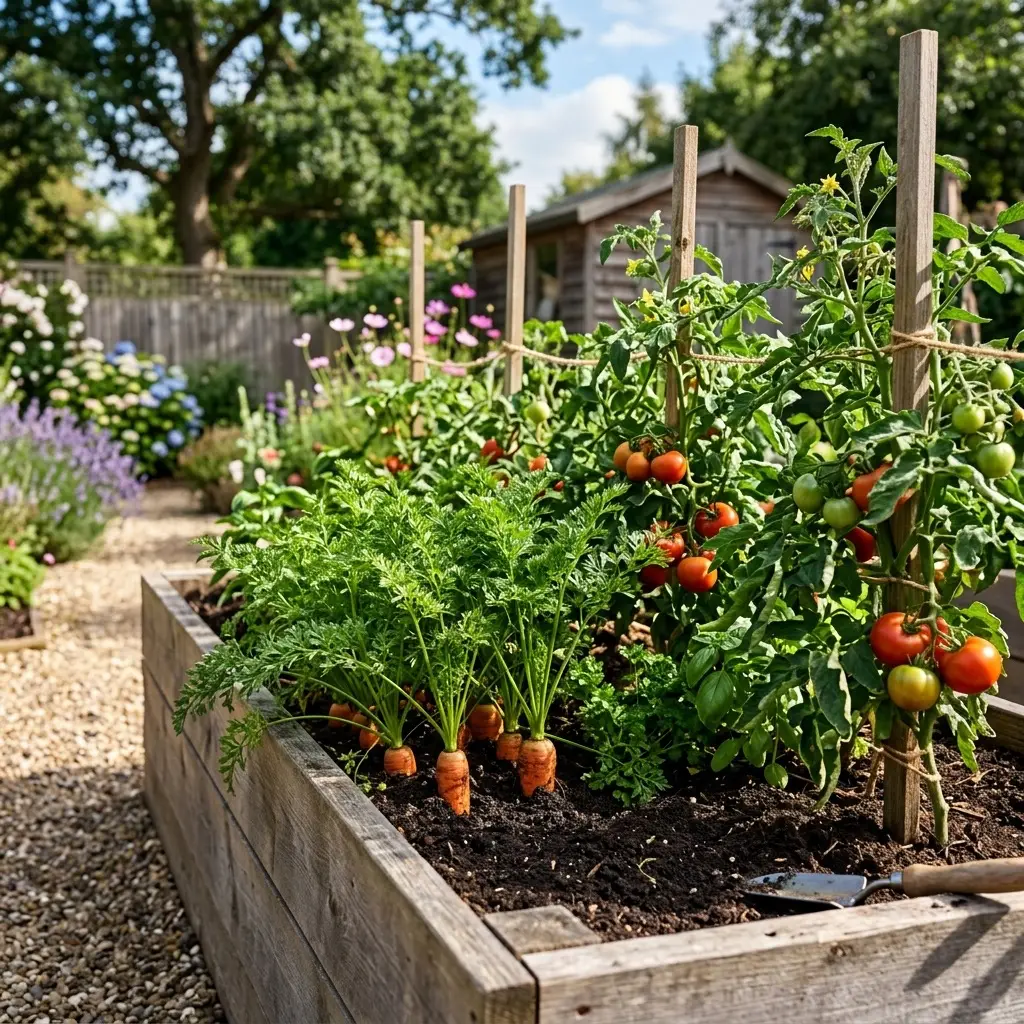
By Azura · Updated July 2026 · Raised Garden Hub is reader-supported. When you buy through links on our site, we may earn an affiliate commission at no extra cost to you.
The best raised bed depth for carrots depends on the variety’s mature root length. Buy a 12-inch open-bottom frame for a mixed Nantes/Danvers plan when the soil below is usable; choose a short Paris/Oxheart or Chantenay type for less depth. Skip a new bed if the existing site already provides the required loose, stone-free root path. Evidence and US product availability were checked July 29, 2026. This is research-based; we have not run a carrot yield trial.
Compare 12-inch open-bottom beds →Start with mature root length
Use the seed packet’s mature length as the starting point. The bed-depth column below is our planning recommendation: it adds loose-soil buffer below the Extension-published carrot length, so it should not be read as a biological hard minimum.
| Carrot type | Typical mature root length | Practical loose-soil depth | Best use case |
|---|---|---|---|
| Miniature / Oxheart / Paris Market | 2–3 in | 6–8 in | Containers and shallow planters |
| Chantenay | 4.5–5.5 in | 8–10 in | Shallower or heavier soil |
| Nantes / Danvers | 6–7 in | 10–12 in | General raised-bed crop |
| Imperator | 8–10 in | 12–14 in | Deep, loose, stone-free bed |
| Parsnip | 10–12 in | 14–16 in | Deep sandy-loam bed |
Sources: Illinois Extension’s carrot-type lengths and University of Minnesota Extension’s soil, direct-seeding, thinning, and parsnip guidance. Information checked July 29, 2026.
If your bed is shallow, choose a round or stubby type rather than forcing an Imperator cultivar into too little loose soil. Our raised-bed size guide covers width and access too, and the raised-bed size calculator helps you plan dimensions.
Soil texture matters as much as depth
A deep bed full of heavy, rocky, or lumpy soil still gives you forked carrots. Root crops want soil that’s:
- Loose and fine — sieve out stones, sticks, and clods before filling
- Sandy loam — the University of Minnesota recommends a light, well-drained texture rather than a dense clay fill
- Low in fresh nitrogen — fresh manure and high-nitrogen feed cause forking and hairy roots
- Free-draining — waterlogged soil rots roots
Start with quality sandy-loam mineral soil and finished compost, then use a soil test instead of a fixed one-size-fits-all recipe. For the full breakdown, see the best soil mix for raised garden beds. Keep the entire expected root path loose and free of stones or undecomposed woody material.
The best bed for root vegetables
For a mixed carrot planting, choose the longest cultivar first and provide uninterrupted loose soil beyond its published mature root length. A 12-inch frame can suit Nantes and Danvers in the planning table; Imperator types may benefit from more prepared depth. Material is secondary to soil texture, drainage, and whether roots can continue into suitable native soil.
12in Open-Bottom Raised Bed (for Mixed Carrot Types)
- 12in plan suits the Nantes/Danvers table row
- Open bottom can extend the root zone into good native soil
- Match the longest cultivar before buying
- Can be filled with screened sandy loam
- Needs stone-free fill to avoid forking
- Deeper beds cost more in soil
Product facts are manufacturer- or retailer-published unless this page documents a Raised Garden Hub measurement. Confirm the exact model, live price, and terms before buying.
The material is a secondary choice — metal vs wood matters less than cultivar fit and soil preparation here. If you want to compare specific beds, use best metal raised garden beds or best raised garden beds of 2026. Growing potatoes too? Their planning method is different: see the potato bed and hilling guide.
Spacing for straight, full-size roots
Overcrowded carrots compete for space. Thin according to the seed packet and local Extension guidance; University of Minnesota’s guide is the source used for this page.
- Carrots: University of Minnesota Extension says to thin when the largest seedlings are three to four inches tall, leaving roughly two to four inches based on mature variety size. Sow seed thinly to begin with, then thin without disturbing the retained roots. Treat any raised-bed spacing chart as a starting layout and defer to the cultivar packet when it differs.
Final checkout checklist
- Match loose-soil depth to the variety table; add several inches below its expected root length
- Use loose, well-drained soil and remove stones, clods, and compaction from the root path
- Avoid unnecessary fresh manure or excessive nitrogen; use the soil-test and crop guidance
- Follow the cultivar and local Extension light and moisture guidance
- Thin at the stage and spacing specified for the mature cultivar
- Choose a short type when the available loose depth is limited
Bottom line: Choose the carrot type first, then provide uninterrupted loose soil beyond its expected root length. A shorter cultivar in well-prepared sandy loam is a better plan than a deep bed filled with compacted or rocky soil.
Before ordering the frame, compare soil, delivery, irrigation, and barrier spend in the raised-bed total-cost calculator.
Frequently asked questions
How deep should a raised bed be for carrots?
Match the loose-soil depth to the variety's mature root length. Illinois Extension lists roughly 2–3 inches for miniature/Paris types, 4.5–5.5 for Chantenay, 6–7 for Nantes and Danvers, and 8–10 for Imperator. Our planning table adds several inches of loose-soil buffer; it is not a published hard minimum.
What is the best soil for growing carrots in a raised bed?
University of Minnesota recommends loose, deep, sandy loam that is free of rocks and clods. Start with suitable mineral soil and finished compost based on a soil test; do not rely on a universal equal-thirds recipe. Avoid fresh manure and excessive nitrogen.
Why are my carrots short, forked, or twisted?
Stones, clods, compaction, fresh manure, excessive nitrogen, or crowding can contribute to short or forked roots. Prepare a loose stone-free root path, thin according to the cultivar guidance, and diagnose other stress rather than assuming one cause.
Can you grow carrots in a shallow raised bed?
Yes, if the variety fits. Miniature/Oxheart/Paris types have 2–3 inch roots and Chantenay types about 4.5–5.5 inches, while Imperator types reach 8–10 inches. Choose the cultivar first, then provide extra loose soil below its expected root length.
What other root vegetables grow well in a deep raised bed?
Use the mature size and production method for each crop rather than one root-vegetable minimum. Parsnips need a longer loose root path than round carrots, while potatoes are planted shallow and hilled in stages. Check the seed or Extension guidance for the exact cultivar.
Is a metal or wood raised bed better for carrots?
Either can work. Choose from coating or wood species, drainage, repairability, current warranty, and budget. We have not run a controlled metal-versus-wood soil-temperature test; cultivar-matched loose soil is the more important planning factor here.