By Azura · Updated July 2026 · Raised Garden Hub is reader-supported. When you buy through links on our site, we may earn an affiliate commission at no extra cost to you.
The Vego integrated bed is our new-patio pick; its fitted wicking floor is the retrofit pick. Buy an integrated system when the published 13.5-inch interior depth, closed bottom, and 3.5-inch reservoir fit the site. Choose a retrofit only after confirming exact bed compatibility. Skip both when a timer-and-drip setup solves the job for less. Specifications and US availability were checked July 28, 2026. These are research-based picks, not hands-on tests.
| Option | Reservoir / root zone | Compatibility | Price check | Evidence |
|---|---|---|---|---|
| Vego 2×6 integrated bed | 3.5-in wicking cells / 13.5-in published interior depth | Complete 2×4, 2×6, or 2×8 system | $269.95 direct for 2×6 when rechecked | Official page; not hands-on tested |
| Vego wicking-floor retrofit | Varies by footprint and bed height | Exact compatible Classic bed required | Verify exact current cart | Official page; not hands-on tested |
| Vegepod | Reservoir plus 11-in published container depth | Complete covered container | Roughly $230–$500 range | Official pages; not hands-on tested |
Vego 2×6 Self-Watering Garden Bed
- 3.5-inch wicking-cell reservoir
- 13.5-inch published interior planting depth
- 2×4, 2×6, and 2×8 formats
- Closed bottom suits patios and balconies
- No Raised Garden Hub hands-on test
- Higher upfront cost than a plain open-bottom bed
- Exact refill interval depends on site and crops
Product facts are manufacturer- or retailer-published unless this page documents a Raised Garden Hub measurement. Confirm the exact model, live price, and terms before buying.
How sub-irrigation actually works
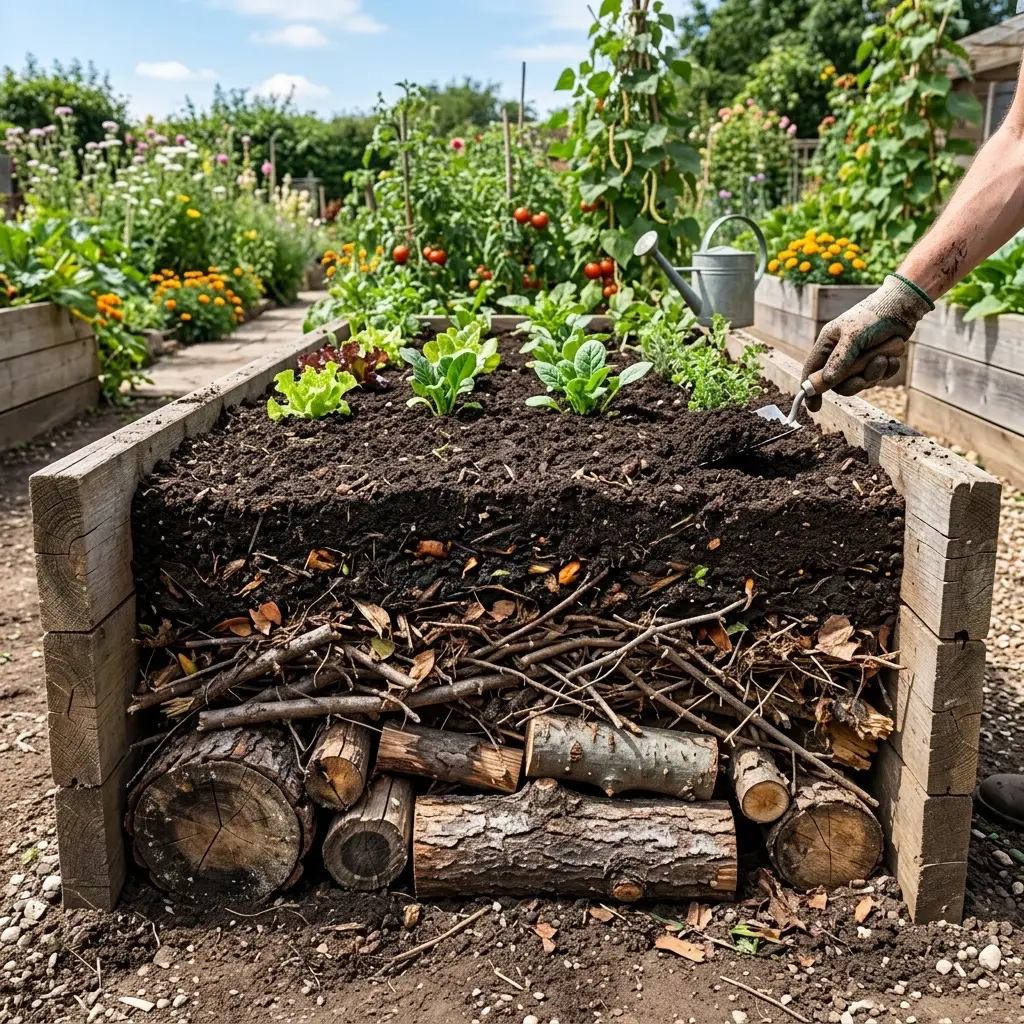
A self-watering bed has three parts stacked from the bottom up:
- A sealed reservoir at the base that holds water
- A wicking layer or platform — wicking cells, a perforated floor, or gravel — that separates water from soil
- The soil and roots above, which pull moisture upward by capillary action
You pour water into a fill tube that runs down to the reservoir. The growing mix and contact columns move moisture upward by capillary action. A correctly placed overflow limits the maximum water level and preserves an air gap; it does not make poor soil or a blocked drain impossible to waterlog. Most systems need no pump or electricity.
Why they’re worth it
- Fewer top-watering decisions when the reservoir is sized for the crop and weather
- Less exposed-surface watering than a conventional hand-watered container
- A visible refill point when the system includes a fill tube and gauge
- More consistent moisture potential once seedlings have established roots into the wicking zone
The tradeoffs: higher upfront cost, less usable soil depth above the reservoir, fit-specific replacement parts, and more setup. In very wet climates, keep the overflow clear. Plants that prefer a dry-down cycle may be a poor match.
Buy a kit or convert your existing bed
You’ve got two paths:
| Option | Best for |
|---|---|
| Self-watering bed kit | New gardens — everything’s integrated and sized to fit |
| Drop-in wicking floor / cells | Upgrading a metal or wood bed you already own |
| DIY sub-irrigation | Budget builds — pond liner reservoir + perforated pipe + wicking medium |
If you already have a compatible bed, a wicking floor insert may avoid buying a second complete frame. Compare the exact insert, labor to remove/refill soil, reduced planting depth, delivery, and replacement parts before calling it cheaper.
Best self-watering option by job
| Job | Best format | Check before buying |
|---|---|---|
| New patio vegetable bed | Closed-bottom integrated raised bed | Loaded weight, drainage route, planting depth |
| Existing compatible metal bed | Manufacturer-fitted wicking floor | Exact bed height and footprint compatibility |
| Elevated planter | Reservoir insert sized to the box | Reservoir volume and remaining root depth |
| Protection plus watering | Covered self-watering bed such as Vegepod | Ventilation, pollination access, replacement cover |
| Lowest upfront cost | DIY sub-irrigated planter | Liner safety, overflow height, stable support |
If the cover-and-reservoir format is the reason for shopping, read the model-specific Vegepod review before comparing its delivered price with an open bed plus separate cover.
Self-Watering Wicking-Floor Retrofit
- Keeps the existing compatible frame
- Fill tube and overflow are designed as one system
- Some models publish reservoir capacity and water gauge
- Avoids buying a second complete bed
- Compatibility is model-specific
- May require removing all existing soil
- Reduces usable planting depth
Product facts are manufacturer- or retailer-published unless this page documents a Raised Garden Hub measurement. Confirm the exact model, live price, and terms before buying.
Whatever you choose, use the exact manufacturer’s growing-mix specification for the reservoir and wicking interface. A mix that works in an open-bottom bed is not automatically suitable for a particular sub-irrigated system. Confirm the required contact material, air gap, overflow, and initial top-watering procedure in the current manual. Our soil guide explains why there is no universal raised-bed recipe, and the soil calculator can size the order after the approved mix and usable planting depth are known.
Match crops to the exact system
Do not buy from a generic “moisture-loving crops” list. For each cultivar, compare its required root volume, canopy and support needs, preferred moisture pattern, and the model’s remaining planting depth. The manufacturer may also require surface watering during establishment before roots and mix form a reliable capillary path. Dry-down-preferring crops may be a weak fit, but site heat, mix, reservoir control, and cultivar still decide the result. Raised Garden Hub has not run a crop-by-crop trial in these systems.
For smaller spaces, the best self-watering planters use the same decision rules: published reservoir volume, an overflow, a usable root-zone depth, and a fill indicator matter more than the word “self-watering” on the box.
Quick checklist before you buy
- Reservoir size — more capacity can extend the interval only when crop and weather demand are comparable
- Fill tube + level indicator — so you know when to top up
- Overflow path — confirm its height, discharge route, and maintenance access
- Wicking medium included (cells, floor, or platform)
- The specified growing mix — follow the current manual for the exact wicking design
- Crop fit — compare cultivar root volume, support, and moisture pattern with the usable root zone
Bottom line: Buy an integrated self-watering raised garden bed for a new patio setup; buy a fitted wicking-floor retrofit when the existing frame is compatible. Confirm reservoir, overflow, root depth, and replacement parts on the exact model, then measure the real refill interval in your climate instead of trusting a universal schedule.
Compare the frame or insert, fill, delivery, replacement parts, and accessories with the raised-bed total-cost calculator.
Frequently asked questions
How does a self-watering raised garden bed work?
It uses sub-irrigation. A reservoir sits below the root zone, separated from the soil by a wicking layer or platform. Moisture moves upward through the growing mix by capillary action. Refill through the model's fill tube when its indicator, inspection method, and actual soil moisture show that water is needed.
Are self-watering raised beds actually worth it?
They can be worth the premium when a compatible reservoir, visible refill point, overflow, and sufficient remaining root depth solve a real watering problem. They are a weaker fit when rainfall is already high, the crop prefers a dry-down cycle, replacement parts are uncertain, or a conventional bed and irrigation timer costs less.
How often do you fill a self-watering garden bed?
There is no reliable universal interval. Reservoir volume, crop size, wind, temperature, rainfall, growing mix, root establishment, and overflow design all change refill frequency. Use the exact model's level indicator or inspection method and verify moisture rather than buying on a fixed-days promise.
Can you convert a regular raised bed to self-watering?
Some manufacturers sell footprint- and height-specific wicking floors for compatible beds. A DIY conversion also needs a structurally suitable frame, documented liner/material choices, a protected fill path, a wicking interface, an overflow, and an inspection plan. Do not assume an insert fits from nominal dimensions alone.
What can you grow in a self-watering raised bed?
Match the remaining planting depth, container area, moisture pattern, and support system to the cultivar. Greens, herbs, peppers, beans, cucumbers, and compact tomatoes may fit many systems, while deep-rooted or dry-down-preferring plants can be poor matches. Raised Garden Hub has not run a comparative crop trial.
Do self-watering beds cause root rot or mosquitoes?
A functioning overflow, air gap, suitable mix, intact cover, and clear fill tube reduce risk but do not guarantee it. Blocked overflow, persistent rain, poor aeration, open standing water, or damaged parts can create waterlogging or pest problems. Follow the exact manual and inspect the system.