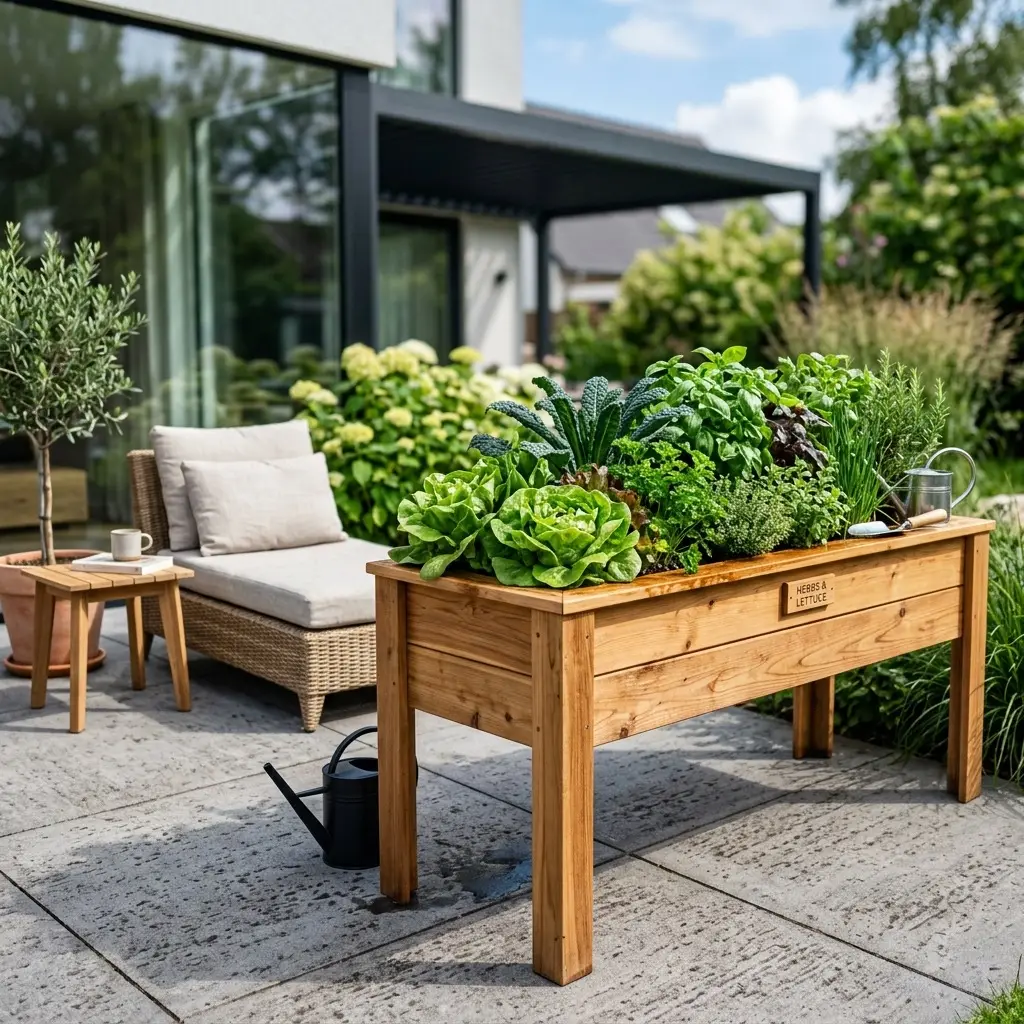
By Azura · Updated July 2026 · Raised Garden Hub is reader-supported. When you buy through links on our site, we may earn an affiliate commission at no extra cost to you.
Best Choice Products is our value-led elevated pick for a small patio herb or greens bed. Buy it when the published 30-inch overall height, 5-cubic-foot capacity, liner, and drainage match the gardener and site. Avoid it for deep-rooted crops or any deck/balcony whose filled-load capacity has not been confirmed. Specifications, US availability, and price ranges were checked July 29, 2026. These are research-based picks; we have not assembled, stability-tested, or weather-tested them.
| Pick | Height / planting depth | Material | Drainage | Written warranty | Price checked | Evidence |
|---|---|---|---|---|---|---|
| Best Choice Products | 30 in overall / verify current inside depth | Manufacturer-described wood | Liner and drainage hole published | Verify current exact-model terms | About $70–$120 | Official page; not hands-on tested |
| Gronomics | 32 in overall / 10 in planting depth | Western red cedar | Verify current manual and site setup | Verify current exact-model terms | About $150–$260 | Official page; not hands-on tested |
| Yaheetech | Verify exact listing | Marketplace-listed wood frame | Verify liner and openings | Seller/model dependent | About $45–$80 | Marketplace listing; not hands-on tested |
Best Choice Products Elevated Raised Garden Bed
- Published 30-in overall height
- Published 5-cu-ft capacity
- Published liner and drainage hole
- Lower checked price than the cedar pick
- Shallower root zone than many ground beds
- Assembly required
- No Raised Garden Hub stability or weathering test
Product facts are manufacturer- or retailer-published unless this page documents a Raised Garden Hub measurement. Confirm the exact model, live price, and terms before buying.
Who should consider an elevated planter
- People seeking less low-level reaching: fit the work height, side reach, knee/toe clearance, path, balance, and tools to the individual. Elevated does not mean clinically pain-free or wheelchair accessible.
- Hardscape gardeners: use a contained planter only after checking drainage, runoff, surface protection, wet weight, wind, and property rules.
- Renters: confirm permission and remember that a filled planter may be difficult to move or disassemble.
- Sites with unsuitable soil: a contained growing medium can isolate roots from the ground, but contamination, dust, runoff, and safe fill sourcing still need local guidance.
If you have good yard space and no mobility concerns, a standard raised bed is usually cheaper per square foot and allows much deeper soil. See the best raised garden beds of 2026 for that comparison.
Match the exact tray to the crop
| Purchase input | What to verify |
|---|---|
| Usable planting depth | Inside depth after liner, reservoir, headspace, and drainage components |
| Growing volume | Manufacturer capacity or inside dimensions, not overall dimensions |
| Crop | Cultivar’s mature root, canopy, support, spacing, and irrigation requirement |
| Surface | Drainage route, wet load, wind, waterproofing, and property rules |
| Gardener | Work height, reach, clearance, path, balance, and tool use |
Compact greens and herbs may suit a smaller tray. Carrots must be matched to mature root type, potatoes need staged hilling room, and tomatoes require sufficient volume plus support. Use the crop-specific guides rather than a generic “8–12 inches grows everything” list.
For more detail on matching soil depth to crops, see how deep a raised garden bed should be.
What to look for when buying
Height
Overall height is not work-surface fit. Test the intended gardener’s position, comfortable reach, elbow height, tray width, wall thickness, knee/toe clearance, tools, and path. Do not label a 30- or 32-inch product universally standing-height or accessible. For a purchase screen organized around those measurements, use the raised beds for seniors and limited-mobility guide; it does not substitute a generic age label for individual fit.
Drainage
Use the exact manufacturer’s base and growing-medium design. Verify outlet area, liner, tray or overflow, runoff route, cleaning access, and whether modifications affect the warranty. On a balcony, obtain load and drainage approval; a tray helps only when it is correctly sized and emptied without creating a slip or overflow hazard.
Material
- Cedar — naturally decay-resistant when the species and heartwood are verified; board thickness, joinery, moisture, and finish still matter.
- Powder-coated steel — avoids biological decay, but coating damage, corrosion protection, fasteners, structure, and drainage determine durability.
- Pine or fir — often cheaper and generally less naturally decay-resistant; follow the manufacturer’s finish and maintenance guidance.
- Plastic or resin — lightweight and corrosion-free, but resin type, UV stabilization, cold-weather limits, and structure vary widely.
Weight capacity and deck safety
A 2×4-foot tray filled 10 inches deep holds about 6.7 cubic feet, not 0.5. Filled weight depends on the actual mix, compaction, retained water, planter, and plants, so do not use a generic soil-density number as structural approval. For a deck or balcony, verify the planter’s rating and consult the property owner, building documentation, or a qualified structural professional before filling.
For help estimating how much soil you need, use the soil calculator.
Our top elevated picks
Best overall — Best Choice Products Elevated Raised Bed
The current Best Choice Products listing publishes a 48×24×30-inch wood planter, liner, drainage hole, and 5-cubic-foot capacity. We have not assembled it, measured stability, or timed setup; use the current manual, weight limit, delivered price, and owner-return pattern as purchase checks.
Best Choice Products Elevated Raised Garden Bed
- Published 30-in overall height
- Published 5-cu-ft capacity
- Published liner and drainage hole
- Lower checked price than the cedar pick
- Shallower root zone than many ground beds
- Assembly required
- No Raised Garden Hub stability or weathering test
Product facts are manufacturer- or retailer-published unless this page documents a Raised Garden Hub measurement. Confirm the exact model, live price, and terms before buying.
Best cedar — Gronomics Elevated Cedar Planter
Gronomics publishes Western red cedar, a 24×48-inch footprint, 32-inch overall height, 10-inch planting depth, and a tool-free assembly design for the reviewed model. We have not compared board thickness, joint strength, finish quality, or long-term weathering against the budget pick.
Gronomics Elevated Cedar Planter
- Manufacturer-published Western red cedar
- Published tool-free assembly for exact model
- 32-inch overall height with 10-inch planting depth
- Premium price point
- Heavier to move once filled
Product facts are manufacturer- or retailer-published unless this page documents a Raised Garden Hub measurement. Confirm the exact model, live price, and terms before buying.
Best budget — Yaheetech Elevated Wooden Planter
This marketplace-listed fir-frame planter is a lower-priced route to a raised work surface and includes a lower shelf. Verify the exact finish, liner, drainage, capacity, hardware, dimensions, seller, and warranty. We have not assembled or weather-tested it and cannot support a three- or four-season promise.
Yaheetech Elevated Wooden Planter with Shelf
- Lowest checked price among these three
- Lower shelf included on the reviewed listing
- Compact elevated footprint
- Material and finish require exact-listing verification
- Shallower tray than a ground bed
- No Raised Garden Hub assembly or weathering test
Product facts are manufacturer- or retailer-published unless this page documents a Raised Garden Hub measurement. Confirm the exact model, live price, and terms before buying.
Depth and crop reference
- Match carrots to the published root-length table.
- Reserve planting and hilling room with the potato setup.
- Use sufficient contained volume and support for the tomato plan.
- For a covered reservoir-based alternative, compare the Vegepod review, including ventilation, cover, planting depth, and replacement parts. Its cover does not guarantee pest or heat control.
Filling an elevated bed
Use the growing medium specified for the exact planter. A contained elevated tray may call for a container-style mix rather than the soil-heavy mix used in an open-bottom framed bed. Do not add compost, perlite, sand, coir, or fertilizer on a universal ratio. Check the product manual, crop, drainage, mix label, and soil-test or Extension guidance. Use the soil calculator with inside dimensions.
For a detailed recipe, the best soil mix for raised garden beds covers ratios and what to look for on the bag.
Is an elevated bed right for you?
An elevated bed makes sense if:
- Bending, kneeling, or crouching causes pain or is difficult for you
- Your outdoor space is a patio, balcony, or deck with no ground access
- You accept the filled weight, drainage, inspection, and storage plan
- The exact crop fits the published planting depth and volume
It is probably not the right choice if:
- The intended cultivar or hilling plan exceeds the published tray volume
- You need a large growing area — cost per square foot is higher than ground-level beds
- You have a yard with decent soil and no mobility concerns
For newcomers still deciding on their first setup, raised bed gardening for beginners walks through all the tradeoffs between elevated planters, standard raised beds, and in-ground growing.
Before checkout, compare the planter, fill, delivery, liner replacement, and accessories with the raised-bed total-cost calculator.
Frequently asked questions
How deep is the soil in an elevated raised garden bed?
Depth is model-specific. The reviewed Gronomics 24x48 page publishes 10.5- and 14-inch planting-depth options; the reviewed Best Choice Products page publishes capacity but requires verification of current inside depth. Match usable volume to the exact crop and manufacturer guidance.
What can you grow in an elevated raised garden bed?
Choose from the exact planting depth and volume, cultivar, support, irrigation, light, and product manual. Compact greens or herbs may fit a shallow tray; larger fruiting or root crops need cultivar-specific volume. Raised Garden Hub has not run crop-yield trials in these planters.
Are elevated garden beds good for people with back problems?
They can reduce low-level reaching when the work-surface height, reach, and knee clearance fit the gardener. They do not guarantee pain relief or wheelchair access. Compare the exact underside clearance and path width, and seek individual clinical guidance when pain or mobility limitations are significant.
Do elevated raised garden beds drain well?
Drainage is model-specific. Verify the outlet, liner, overflow or tray, growing-medium requirement, runoff route, and maintenance instructions. Do not drill, line, or modify a structural planter unless the manufacturer permits it.
What is the best material for an elevated raised garden bed?
Material is one factor among structure, drainage, capacity, finish, fasteners, warranty, and maintenance. Cedar heartwood is naturally decay-resistant; coated steel avoids biological decay; and plastics vary widely. Verify the exact material and manufacturer guidance instead of assuming a fixed lifespan.
How much weight can an elevated raised garden bed hold?
Weight capacity varies by model, and the filled load includes soil, retained water, plants, the planter, and people or equipment nearby. Calculate volume from the inside dimensions, use a conservative material-density estimate, and confirm both the planter rating and structure capacity with the manufacturer or a qualified professional.