By Azura · Updated July 2026 · Raised Garden Hub is reader-supported. When you buy through links on our site, we may earn an affiliate commission at no extra cost to you.
A practical strawberry setup is a free-draining 10–12 inch open-bottom bed over usable soil, or an elevated planter with enough contained root volume and closer moisture monitoring. Match the cultivar type and runner system before choosing the footprint; a raised wall alone does not guarantee warmer soil, pest exclusion, or healthier plants. Evidence and US product availability were checked July 29, 2026. This is research-based; we have not run a strawberry yield trial.
Compare strawberry-bed formats →Match the bed and spacing to the strawberry type
University of Minnesota Extension places most strawberry roots in the top 6 to 12 inches. The production system matters too: June-bearing plants spread by runners, while day-neutral plants are commonly managed as individual plants with runners removed.
| Type | Extension-listed examples | Practical bed plan | Spacing / runner plan |
|---|---|---|---|
| June-bearing | Earliglow, Jewel, Honeoye, Cavendish | 10–12 in over usable soil | 18–24 in initially; allow a controlled matted row |
| Day-neutral | Seascape, Albion | 10–12 in; elevated bed can work | 8–12 in in double rows; remove runners |
| Everbearing | Ogallala | 10–12 in; monitor moisture | Follow nursery spacing and manage runners for airflow |
| Alpine / woodland | Alpine strawberry | Shallow-to-standard planter | Compact habit; some selections produce few or no runners |
Sources: University of Minnesota Extension’s home-garden strawberry guide, day-neutral variety trials and spacing, and planting-depth/root-zone guidance. Information checked July 29, 2026.
Because University of Minnesota places most roots in the top 6–12 inches, strawberries can fit shallower formats than many contained tomato systems. See how to choose raised-bed size for the open-bottom-versus-hardscape distinction.
Drainage is the dealbreaker
Poor drainage raises crown- and root-disease risk. A raised bed can help where native soil is compacted, but only if the fill, outlet, and irrigation are designed to drain; a poorly designed raised bed can still stay waterlogged.
Use a well-drained mineral-soil/finished-compost blend guided by a soil test and local strawberry recommendations. Avoid a fixed compost-heavy recipe. Our best soil mix for raised garden beds covers planning options, and the soil calculator estimates volume.
Elevated beds are excellent for strawberries
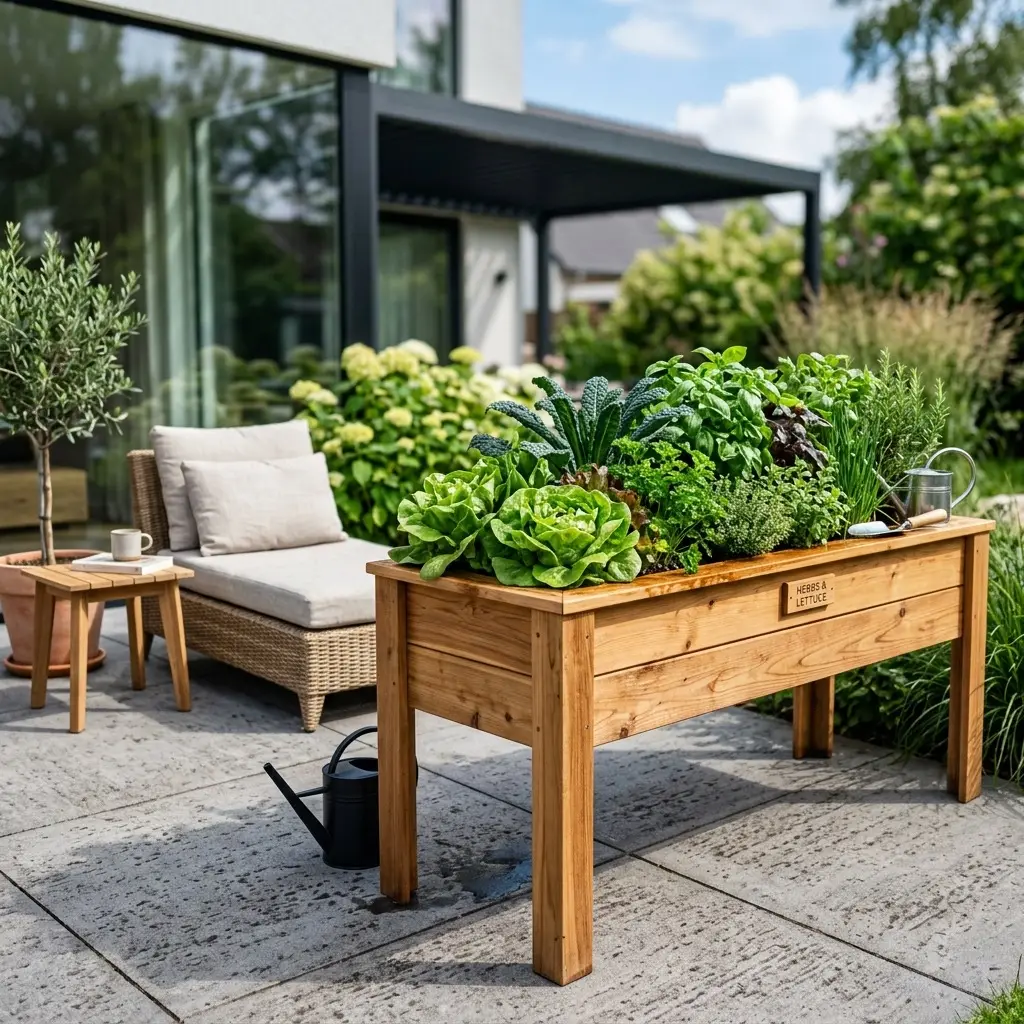
An elevated planter is worth considering when access and runner management matter:
- Drainage can be controlled — provided the planter has clear outlets and suitable mix
- Cleaner access — fruit is easier to inspect and can be kept away from soil splash
- Potentially easier picking and runner control — a fitted height can reduce low reaching, but does not guarantee no bending
- Less soil splash — when watering is directed below the foliage
The tradeoff is a smaller, exposed root volume that may need closer moisture monitoring than an open-bottom bed; refill frequency depends on planter volume, weather, mix, crop stage, and drainage. See our best elevated raised garden beds roundup for model-specific comparisons.
The best bed for strawberries
For an open-bottom patch over usable soil, a 10–12 inch metal or wood frame is a practical starting plan. On concrete or another hard surface, prioritize contained soil volume, drainage, and irrigation over the nominal wall height.
10–12in Raised Bed for Strawberries
- 10–12in plan covers most of the published root zone
- Drainage is easier to manage than in compacted ground
- Easy access for harvest and runner control
- Works with June-bearing or day-neutral systems
- Needs a crop-appropriate slightly acidic soil test result
- Small elevated volumes need closer moisture checks
Product facts are manufacturer- or retailer-published unless this page documents a Raised Garden Hub measurement. Confirm the exact model, live price, and terms before buying.
The bed material matters far less than drainage and soil — see metal vs wood if you’re deciding, or the best raised garden beds of 2026 for picks at every size and price.
Spacing and runner management
How you space strawberries depends on the variety:
- June-bearing (one concentrated crop): plant 18–24 inches apart initially and let selected runners fill a controlled matted row
- Day-neutral: University of Minnesota’s production guidance uses roughly 8–12 inches in double rows and removes runners; verify the nursery and local Extension plan for everbearing cultivars rather than assuming the same system
In year one, pinch the first flowers off June-bearing plants so they build strong roots before fruiting. The raised bed plant spacing chart has exact numbers for strawberries and everything else.
Quick checklist for a great strawberry bed
- 10–12 inches over usable soil as a planning format, or enough contained volume on hardscape
- Free drainage with clear outlets and moisture checks
- Slightly acidic soil managed from a soil test and local guidance
- Site-appropriate sun exposure for the selected cultivar
- Space by variety — wider for June-bearers, tighter for everbearers
- Manage runners — let them root (June-bearing) or pinch them (everbearing)
Bottom line: Match the bed to the strawberry type, keep the crown at soil level, use a free-draining root zone, and manage runners according to the production system. Treat 10–12 inches as an open-bottom planning format—not a universal hard minimum or a yield promise.
Use the raised-bed total-cost calculator to compare the frame, contained mix, delivery, irrigation, mulch, and bird or pest protection before checkout.
Frequently asked questions
How deep does a raised bed need to be for strawberries?
University of Minnesota Extension says most strawberry roots are in the top 6–12 inches. A 10–12 inch bed is a practical plan over usable native soil; use a deeper contained root zone on concrete or another hard surface. Shallow and elevated planters need closer moisture monitoring.
What is the best type of raised bed for strawberries?
A well-drained open-bottom or elevated bed can work. University of Minnesota places most roots in the top 6–12 inches, so a 10–12 inch plan over usable soil is practical; use more contained root volume on hardscape. Elevated beds improve access but dry faster and do not guarantee pest exclusion.
How far apart should I plant strawberries in a raised bed?
Spacing depends on the production system. University of Minnesota's home-garden guidance starts June-bearing matted rows about 18–24 inches apart, while its day-neutral guidance uses roughly 8–12 inches in double rows with runners removed. Follow the nursery label when it differs.
What soil and pH do strawberries need in a raised bed?
Use well-drained soil in the slightly acidic range recommended by the local Extension or soil test. Incorporate finished compost according to the source material and test rather than using a compost-heavy universal recipe. Keep the crown at soil level and avoid waterlogged conditions.
Should I pinch off strawberry runners?
It depends on the cultivar and production system. University of Minnesota's day-neutral guidance removes runners, while its June-bearing home-garden system allows selected runners to form a controlled matted row. Follow the current nursery and local Extension plan; do not apply one runner rule to every strawberry type.
Can you grow strawberries in a shallow or elevated raised bed?
Yes, when contained root volume, drainage, and irrigation match the cultivar system. Most roots are in the top 6–12 inches, but a small elevated volume can dry quickly. Treat 10–12 inches over usable soil as a planning setup, not a universal hard minimum.