By Azura · Updated July 2026 · Raised Garden Hub is reader-supported. When you buy through links on our site, we may earn an affiliate commission at no extra cost to you.
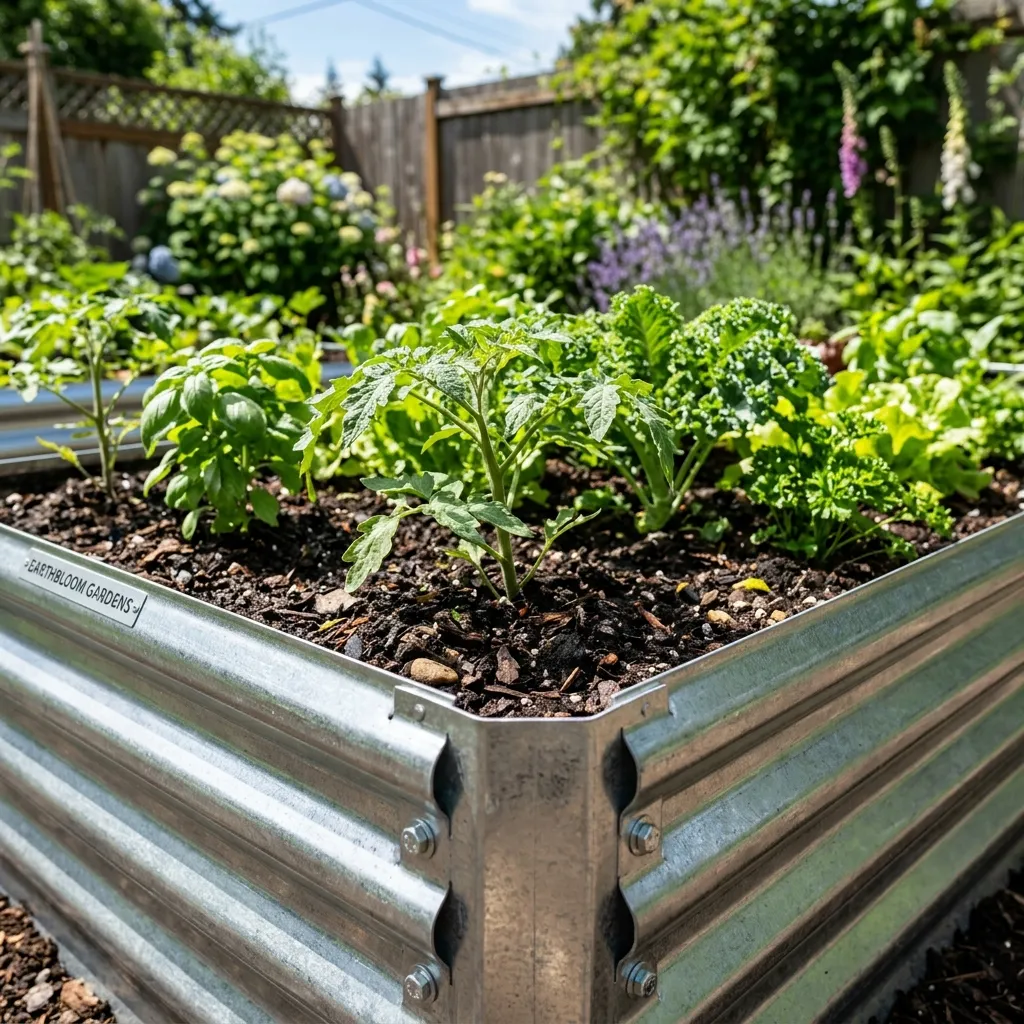
Short answer: yes — galvanized metal raised beds are safe for growing vegetables in normal garden soil. The worry is whether the zinc coating leaches into your food in harmful amounts. The scientific consensus and university extension services are reassuring on this, with one key condition: keep your soil pH near neutral.
What galvanizing actually is
Galvanizing is a corrosion-protection process in which steel is coated with a layer of zinc. The most common method — hot-dip galvanizing — dips the steel into molten zinc, bonding a thick, durable layer to the surface. That zinc layer is what keeps the steel from rusting year after year in wet garden soil.
Many modern raised-bed brands have moved to a more sophisticated coating called Aluzinc (also labeled Zincalume or ZAM depending on the manufacturer). Aluzinc is an alloy of aluminum, zinc, and sometimes magnesium. It outperforms plain zinc in corrosion resistance and is the coating used by most premium brands on the market. If you’re comparing options, see the best metal raised garden beds roundup for a breakdown of how coatings differ across brands.
The zinc-leaching question, answered honestly
Zinc is the element people worry about. Here is the straightforward picture:
- Zinc does leach — but in tiny amounts under typical conditions. At soil pH 6.0–7.0, zinc is nearly insoluble. The chemistry strongly limits how much can move from the coating into your soil and eventually into plants.
- Leaching slows over time. As the zinc surface oxidizes, it forms a stable patina (a mix of zinc carbonates and oxides) that acts as a barrier. A bed that has been in service for a few seasons releases far less zinc than a brand-new one.
- Zinc is a nutrient, not a poison. Zinc is an essential micronutrient for plants, animals, and people. Problems from zinc toxicity require concentrations dramatically higher than what intact galvanized beds in a home garden produce. Extension services that have addressed this directly conclude that properly maintained galvanized raised beds pose minimal risk.
The comparison that matters: documented cases of zinc soil contamination come from industrial sites — smelters, mining runoff, heavy traffic corridors — not from raised garden beds. The source and scale are completely different.
Extension services and horticultural researchers consistently conclude that galvanized raised beds pose minimal risk at neutral soil pH. Treating a home garden bed as equivalent to an industrial contamination site is not supported by the evidence.
Soil pH: the one variable that actually matters
If you take one thing from this article, make it this: soil pH controls zinc mobility more than any other factor.
Below pH 6.0, zinc becomes increasingly soluble and leaching accelerates. Above 6.5, zinc is nearly immobile in soil and very little reaches plant roots. Most vegetables grow best between pH 6.0 and 7.0 anyway, so optimizing for plants automatically optimizes for this concern.
Check your soil pH once a year with an inexpensive test kit. If it dips below 6.0 — which can happen gradually in beds heavily amended with peat moss, pine bark, or other acidic materials — raise it with garden lime, wood ash, or crushed eggshells. This single step is the most effective safety measure available.
Getting the rest of your soil mix right matters too. A mix with good organic matter and proper drainage keeps pH stable and supports healthy plants. The best soil mix for raised garden beds guide walks through proportions and amendment choices in detail.
Do metal beds overheat the soil?
This is one of the most persistent myths about metal raised beds, and it deserves a clear answer: metal sides do not cook plant roots in a properly managed bed.
Yes, metal panels conduct heat. On a sunny summer afternoon, the outside face of a metal bed can get hot to the touch. But a few things limit what that actually means for your plants:
- Soil is an excellent thermal buffer. The mass of moist soil inside the bed absorbs and dissipates heat. Temperatures at root depth — even a few inches from the metal wall — stay well within ranges vegetables tolerate.
- Mulch helps on hot days. A 2–3 inch layer of straw, shredded leaves, or wood chips on the soil surface insulates the top layer and slows both moisture loss and heat gain.
- Watering keeps everything cooler. Beds with consistent moisture moderate temperature swings naturally.
In practice, growers in warm climates regularly report excellent results with metal beds through summer. The bigger heat challenge is usually the air temperature, not the bed itself. For a direct comparison of how metal handles heat versus wood, see metal vs wood raised garden beds.
When to be more cautious
For most gardeners, the standard precautions above are all you need. A few situations call for extra attention:
Very acidic soil. If your soil consistently reads below pH 5.5 and you grow root vegetables or leafy greens that concentrate minerals, adding a liner to the interior walls is a reasonable extra step. A sheet of food-grade HDPE or a heavy-duty landscape fabric does not affect drainage and keeps direct soil-to-metal contact to a minimum.
Old or unknown coatings. Purpose-built garden beds from reputable brands use modern galvanizing or Aluzinc that meets consumer safety standards. Beds fashioned from salvaged material — old stock tanks, industrial containers, roofing sheets — may have coatings from unknown sources. Older industrial zinc coatings occasionally contained lead or cadmium. If you are repurposing found metal, testing the material or choosing a new purpose-built bed eliminates the uncertainty.
Damaged or corroding coating. Rust appearing through the zinc layer means the coating has failed at that spot. This is more of a structural concern than a toxicity one, but it signals the bed is approaching end of life. Avoid sanding or grinding the interior, which removes the coating faster than normal weathering.
How galvanized compares to wood
Wood beds, particularly those made with untreated timber, are often suggested as the “safe” alternative. The honest comparison is more nuanced: untreated softwoods rot within a few years, requiring replacement. Pressure-treated lumber (modern ACQ-treated pine) is safer than older CCA-treated wood but still leaches copper-based preservatives into soil. Naturally rot-resistant options like cedar or redwood are long-lasting but expensive and increasingly scarce.
There is no universal service-life advantage that can be expressed as a fixed number of years. Coating specification and damage, soil chemistry, drainage, climate, and installation matter, and metal frames still need inspection. The metal vs wood raised garden beds comparison covers this trade-off in full. If you prefer wood, the best wood for raised garden beds guide identifies the safest and longest-lasting species.
How to fill and set up a new metal bed
The coating matters, but what goes inside the bed matters just as much. Starting with a quality soil mix at the right pH is the foundation of both plant health and safe bed chemistry. If you’re filling a new bed, the how to fill a raised garden bed guide walks through layering methods and volume calculations.
Bottom line
For the overwhelming majority of home gardeners, galvanized and Aluzinc raised beds are a safe, durable, and practical choice. The zinc concern is real in theory but minimal in practice when:
- Soil pH is kept between 6.0 and 7.0
- The coating is intact (no heavy scratching or grinding)
- The bed is purpose-built rather than salvaged from an unknown source
There is no credible evidence that properly maintained galvanized beds produce zinc levels in vegetables that pose a health risk. The scientific consensus supports using them confidently.
Ready to choose one? See our best raised garden beds of 2026 for top picks across price points, or go deeper on the Vego Garden review if you want a detailed look at one of the leading Aluzinc brands.
Frequently asked questions
Does zinc leach from galvanized steel into garden soil?
Yes, a small amount of zinc can leach from galvanized steel, but the rate is very low at normal garden soil pH (6.0–7.0). As the coating oxidizes and forms a patina, leaching slows further over time. University extension services consistently rate properly maintained galvanized beds as minimal risk for home gardeners.
Is galvanized steel safe for growing vegetables?
For most home gardeners, yes. Zinc is an essential micronutrient for both plants and people, and the quantities that can migrate from an intact galvanized coating into neutral-pH soil are well below harmful levels. Keep soil pH between 6.0 and 7.0 and maintain the coating, and galvanized beds are a safe long-term choice.
Do metal raised garden beds get too hot and cook plant roots?
This concern is largely a myth in practice. Metal panels conduct heat, so the sides can get warm on a hot day, but the soil mass inside acts as a buffer and stays within safe root temperature ranges. Mulching the surface and keeping the beds well-watered on peak summer days prevents any heat stress near the edges.
What is Aluzinc and is it safer than standard galvanized steel?
Aluzinc is an alloy coating that combines aluminum, zinc, and sometimes magnesium. It resists corrosion even better than plain zinc galvanizing and is the coating used by most premium raised-bed brands. Many of these beds also add a food-safe powder-coat finish. Aluzinc beds are at least as safe as standard galvanized, and often marketed specifically as food-safe.
Are there lead concerns with galvanized metal garden beds?
Modern galvanized steel produced to consumer product standards does not contain lead. Lead was occasionally used in older industrial zinc coatings and can appear in beds salvaged from unknown sources — for example, old water tanks or industrial containers. If you are repurposing metal from an unknown origin, it is worth testing it or choosing a purpose-built garden bed instead.
Does soil pH affect how much zinc leaches from galvanized beds?
Yes, soil pH is the most important factor. Zinc dissolves readily in acidic conditions below about pH 6.0 and becomes far less soluble as pH rises toward neutral. If your soil runs acidic — common in areas with high rainfall or in beds heavily amended with peat — periodic liming to bring pH back to 6.0–7.0 is the single most effective precaution you can take.