By Azura · Updated June 2026 · Raised Garden Hub is reader-supported. When you buy through links on our site, we may earn an affiliate commission at no extra cost to you.
Raised beds dry out faster than in-ground gardens because they are exposed to air on all sides and drain more freely — but there are six proven ways to dramatically reduce how often you need to water, starting with a layer of mulch applied today.
One of the most common frustrations for raised bed gardeners, especially in their first or second season, is discovering that the soil needs water almost every day — sometimes more frequently. You water in the morning and by evening the top inch or two is already dry and pulling away from the bed frame. Plants wilt in the afternoon even when you watered that same day. You are spending more time with a hose than you expected.
This is not a sign that you did something wrong. It is a structural characteristic of raised beds that every gardener encounters, and it is completely solvable. Here is why it happens and what to do about it.
Why Raised Beds Dry Out Faster Than In-Ground Soil
Understanding the cause makes the solutions obvious.
An in-ground vegetable bed loses moisture from only one surface: the top. The soil below grade is insulated by the surrounding earth, which stays at a relatively stable temperature and humidity. Water does not readily drain away because the surrounding native soil slows it down.
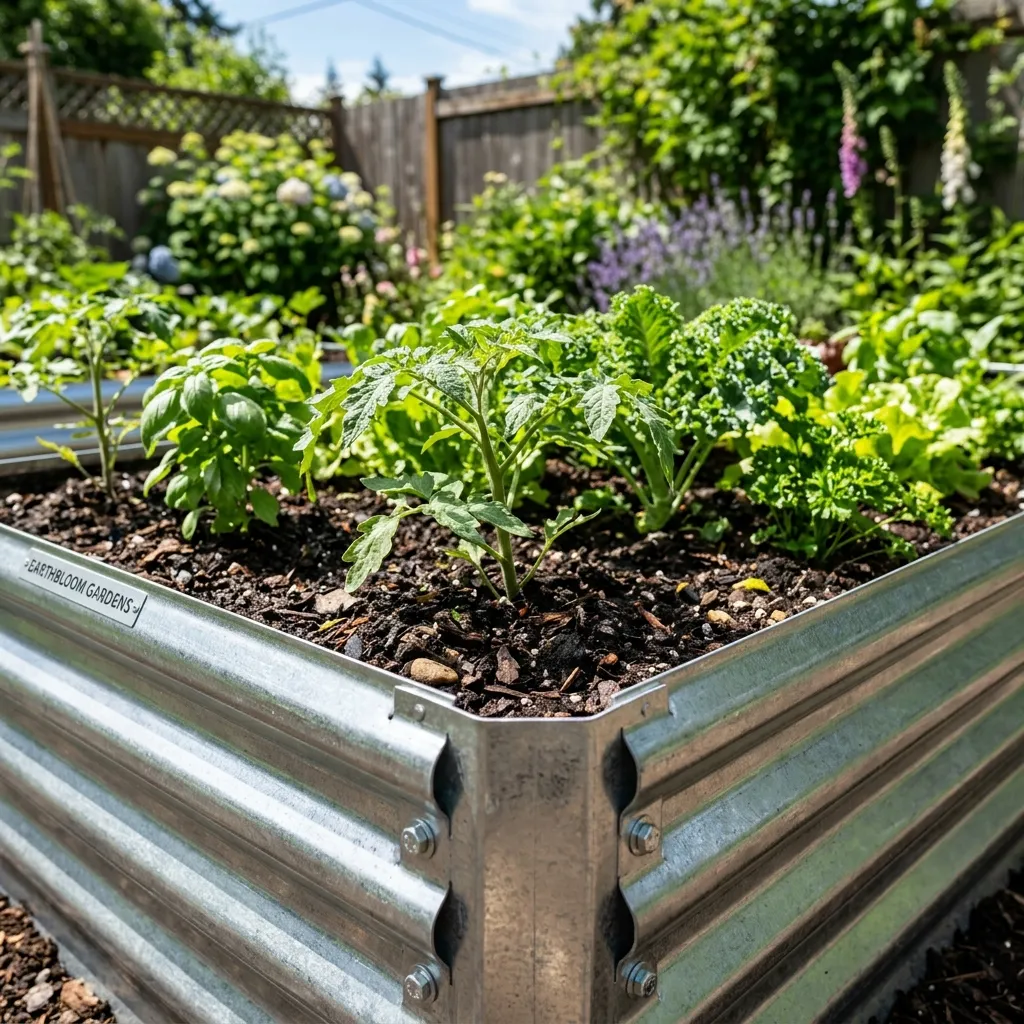
A raised bed has four exposed sides, an exposed top, and — in most designs — an open bottom. Heat from the sun warms the wood or metal frame, which in turn warms and dries the soil near the edges. Wind accelerates evaporation from all exposed surfaces. The well-draining growing mix that makes raised beds so productive for plant roots also means water moves through the profile faster than in compacted native soil.
Bed depth compounds the issue: a 6-inch bed has much less soil volume to buffer against drying than a 12-inch bed. Metal beds, which conduct heat readily, exacerbate the problem compared to wood or composite frames.
None of this means raised beds are a mistake — far from it. But it does mean that moisture management requires more active attention than in-ground growing, at least until you have the right systems in place.
Fix 1: Mulch — the Single Highest-Impact Change You Can Make
A 2 to 3 inch layer of mulch on the soil surface reduces evaporation by 50 to 70 percent, according to university extension research. It also moderates soil temperature, suppresses weeds, and slowly adds organic matter as it breaks down. If you are only going to make one change, make it this one.
Good mulch options for raised beds:
Straw (not hay — straw has no seeds) is the most popular option. It is inexpensive, easy to spread, breaks down over a season, and keeps soil noticeably cooler in summer. Replace it each season.
Shredded leaves are free if you have trees and an excellent mulch. Run them through a mower or leaf shredder to prevent matting. They break down quickly and feed soil biology.
Wood chips (arborist chips, not dyed bark mulch) retain moisture the longest and suppress weeds most effectively. They tie up some nitrogen as they decompose, so keep them on the surface rather than mixing them into the soil.
Apply mulch after planting and keep it a few inches away from plant stems to prevent rot. Refresh it when it thins below an inch or two.
Fix 2: Improve Your Soil Mix
If your raised bed is filled with a peat-heavy or sandy mix, or if you have been growing in it for several seasons without adding organic matter, the soil structure may be contributing to rapid drainage. A good raised bed growing mix should be roughly one-third compost by volume, which significantly improves moisture-holding capacity without compromising drainage or aeration.
For beds that drain extremely fast, consider adding coconut coir (coco peat) at 10 to 20 percent of total volume. Coir holds 8 to 10 times its weight in water, resists compaction, and has a near-neutral pH. It is an especially effective amendment for sandy or perlite-heavy mixes that drain almost instantly after watering.
Biochar — charred wood or plant material — is another option worth exploring. It acts as a water reservoir in the soil profile, holding moisture in its porous structure while remaining stable in the soil for decades. A rate of 5 to 10 percent by volume is a starting point.
For a deep dive into getting the right mix from the start — or rebuilding a bed that is underperforming — see our complete guide to the best soil mix for raised garden beds, and our companion post on how to fill a raised garden bed step by step.
Fix 3: Install Drip Irrigation or Soaker Hoses
Hand watering is one of the least efficient ways to water a raised bed. Overhead watering loses a significant percentage of water to evaporation before it even reaches the soil, and wetting foliage promotes fungal disease. A soaker hose or drip system delivers water directly to the root zone where plants need it, with minimal losses.
Soaker hoses are the most affordable option: coil them through the bed at installation or lay them in rows between plants. Connect to a timer and you can automate the entire process.
Drip emitter systems are more precise and can be configured to deliver specific rates to individual plants. They cost more to set up but are ideal for larger growing operations or beds with mixed crops that have different water needs.
Either system, combined with a battery-operated timer, can cut daily watering time to zero during normal conditions. Set the timer to run in the early morning, which reduces evaporative loss and gives foliage time to dry before evening.
Even without a timer, simply switching from overhead to drip reduces water use by 30 to 50 percent and improves plant health.
Fix 4: Adjust Your Watering Schedule and Technique
If you are currently watering lightly and frequently, you may be training plant roots to stay shallow — where soil dries fastest. Deep, infrequent watering encourages roots to grow deeper into the bed, where moisture is more stable.
Water until you see drainage from the bottom of the bed, then wait until the top 2 inches of soil feel dry before watering again. Push a finger or a wooden chopstick 2 to 3 inches into the soil — if it comes out dry, water. If it comes out with soil sticking to it, wait another day.
Watering in the early morning is significantly more efficient than watering in the afternoon. Morning water has hours to soak in before peak temperatures arrive. Afternoon watering loses a disproportionate amount to evaporation and may not get roots wet before the sun does its work.
Fix 5: Use Shade Cloth During Peak Summer Heat
Direct sun on bare soil is one of the biggest drivers of rapid moisture loss. A 30 to 40 percent shade cloth installed on a simple frame above the bed significantly reduces surface temperature and slows evaporation — sometimes by as much as 40 percent on the hottest days.
Shade cloth also benefits many crops directly: lettuces, spinach, cilantro, and other cool-season greens bolt much later in the season when protected from intense afternoon sun. Even heat-loving crops like tomatoes and peppers appreciate afternoon shade during heat waves, reducing heat stress and flower drop.
Install shade cloth on a simple PVC or conduit frame that can be removed easily as needed. Leave the sides open for air circulation.
Fix 6: Try Hugelkultur for Long-Term Moisture Retention
If you are building a new raised bed or are willing to do a significant renovation of an existing one, hugelkultur is the most impressive moisture-retention technique in the raised bed toolkit. Logs, branches, and woody debris buried beneath the growing soil act like a slow-release sponge — absorbing water during rain or irrigation and releasing it slowly over weeks as the wood breaks down.
A properly constructed hugelkultur bed can go weeks without supplemental watering once established, even in summer. The decomposing wood also generates heat (extending the growing season), feeds soil biology, and builds an extraordinary growing medium over several seasons.
Our hugelkultur raised bed guide covers the construction process in detail, including what wood species to use, how deep to bury the material, and what to expect in the first season versus the second and third.
Choosing a Bed That Helps Rather Than Hurts
The raised bed material itself has a measurable impact on soil moisture. Metal beds, while popular and attractive, conduct heat readily and can raise soil temperatures significantly in direct sun — accelerating evaporation from the root zone. Thick cedar or redwood boards insulate better. Composite and plastic beds fall somewhere in between.
Deeper beds retain moisture longer because there is more soil volume to buffer against drying. For most vegetables, a minimum of 10 to 12 inches of depth is recommended; for deep-rooted crops like tomatoes and carrots, 18 inches is significantly better.
For guidance on selecting a bed with the right depth, material, and drainage characteristics for your growing conditions, our comprehensive guide to the best raised garden beds evaluates the top options across a wide range of price points and configurations.
Putting It All Together: A Practical Priority Order
If you are dealing with a bed that dries out constantly, here is the order in which to implement these fixes — starting with what has the biggest impact for the least effort and cost:
- Add 2 to 3 inches of mulch immediately — this is a same-day fix with immediate results
- Install a soaker hose or drip system with a timer — eliminates daily watering and maximizes efficiency
- Top-dress with mature compost each season — builds moisture-holding organic matter over time
- Adjust to deep, infrequent watering rather than light, frequent watering
- Add shade cloth during July and August
- Plan a hugelkultur renovation if you are building or significantly rebuilding a bed
Used in combination, these strategies transform even the fastest-draining raised bed into a resilient growing system that holds moisture through summer heat and stays productive with a fraction of the daily watering effort. For help calculating exactly how much soil you need to fill or top-dress your beds, use our free soil calculator.
For a complete watering schedule broken down by season, crop type, and bed depth, see our companion guide on how often to water a raised garden bed.
Frequently asked questions
Why does raised bed soil dry out faster than in-ground soil?
Raised beds are exposed to air on all four sides plus the top, which accelerates evaporation from the root zone. The improved drainage that makes raised beds so productive also means water drains through faster than in compacted native soil.
How often should I water a raised garden bed?
Most raised beds need watering every 1 to 3 days during warm weather, compared to every 3 to 7 days for in-ground gardens. Frequency depends on bed depth, soil composition, mulch, temperature, and what is planted. Check soil moisture 2 inches below the surface daily rather than watering on a fixed schedule.
What is the best mulch for raised beds to retain moisture?
Straw, shredded leaves, and wood chips all retain moisture effectively in raised beds. Apply a 2 to 3 inch layer, keeping mulch a few inches away from plant stems. Straw is lightweight and easy to work with; wood chips retain moisture longest but can tie up nitrogen as they decompose.
Can I add anything to raised bed soil to help it hold water?
Yes. Mixing in 20 to 30 percent by volume of mature compost significantly improves moisture retention. Coir (coconut fiber) is another effective amendment — it holds many times its weight in water and does not compact over time. Biochar can also improve water-holding capacity in sandy or fast-draining mixes.
Is drip irrigation worth it for raised beds?
Drip irrigation is one of the most effective investments you can make for raised bed gardening. It delivers water directly to the root zone, eliminates surface evaporation losses from overhead watering, and can be automated with a timer — dramatically reducing both water use and the daily workload of hand watering.
Does bed depth affect how fast soil dries out?
Yes. Shallower beds (6 inches or less) dry out the fastest because there is less soil volume to hold moisture and roots have less access to deeper, cooler soil. Beds that are 10 to 12 inches deep retain moisture significantly longer and support a wider range of vegetables.
What is hugelkultur and does it help with water retention?
Hugelkultur is a technique where logs, branches, and woody material are buried beneath the growing soil in a raised bed. The wood acts like a sponge, absorbing and slowly releasing water throughout the growing season. It is one of the most effective long-term solutions for raised beds that dry out quickly.
Can shade cloth help keep raised bed soil moist?
Yes. A 30 to 40 percent shade cloth reduces direct sun exposure on the bed, lowering soil temperature and cutting evaporation significantly. It is especially useful during summer heat waves. Most cool-season and leafy green crops actually prefer the filtered light shade cloth provides.