By Azura · Updated June 2026 · Raised Garden Hub is reader-supported. When you buy through links on our site, we may earn an affiliate commission at no extra cost to you.
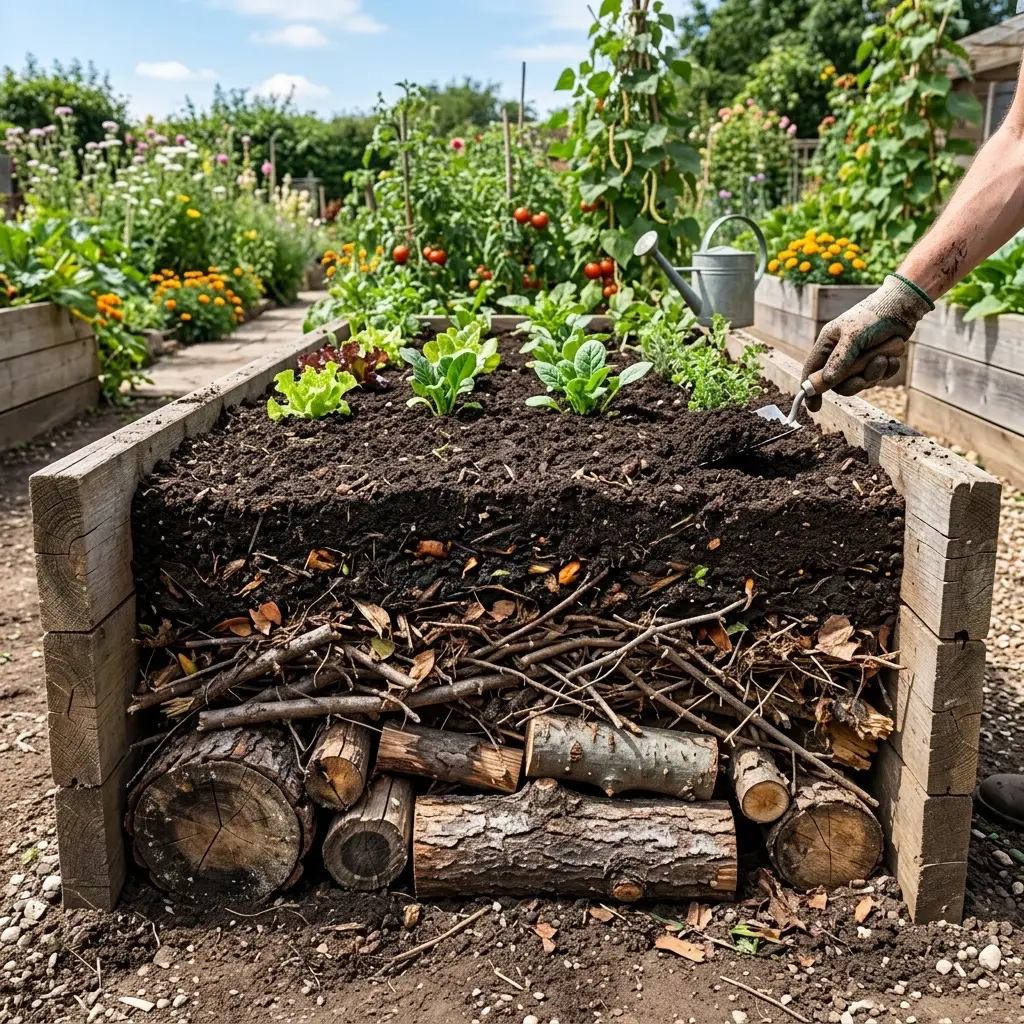
Hugelkultur means filling the bottom of a deep raised bed with logs and branches, then topping it with soil. As the buried wood breaks down it holds water and feeds your plants for years — and it cuts your soil bill significantly. Here’s how to build one, what materials to use, and what to watch for in year one.
Why hugelkultur works
Buried wood does three things at once that regular soil cannot:
- Acts as a moisture reservoir. Rotting wood is like a sponge — it can hold many times its weight in water and releases it slowly to surrounding roots. In a hot summer, a hugelkultur bed needs watering noticeably less often than a bed filled purely with purchased mix.
- Releases slow nutrients. As fungi and bacteria break down the wood, they liberate minerals and organic matter over many seasons. You get a multi-year, low-maintenance fertility boost without buying bags of slow-release fertilizer.
- Reduces soil costs. The volume of soil needed for a raised bed adds up fast, especially for deep beds. Filling the bottom third with wood — material you may already have from pruning or fallen branches — directly replaces that volume.
Rule of thumb: Logs and branches should fill no more than the bottom half of the bed. Always finish with at least 8–10 inches of quality growing mix on top — that is where roots will live.
What depth do you need?
Hugelkultur makes the most sense in beds that are at least 18 inches deep. In a shallow 6-inch bed there isn’t room for a meaningful wood layer and still have adequate growing depth on top. If you’re deciding on bed depth before you build, check how deep a raised bed should be — 18 to 24 inches gives you the ideal split between wood filler and growing soil.
Best and worst woods for hugelkultur
Not all wood is equal. The species you choose affects decomposition speed, plant safety, and long-term soil health.
Good choices:
- Oak, apple, pear, and cherry — dense, decompose steadily, excellent fungi habitat
- Birch and alder — break down quickly, great for a faster nutrient release
- Poplar and willow — softer, decompose in three to five years, good starter choice
- Pine and fir — fine to use; they break down faster than hardwoods and add some acidity
- Partly rotted wood from a brush pile — ideal, the decomposition process is already underway
Woods to avoid:
- Black walnut — contains juglone, an allelopathic compound that suppresses the germination and growth of many vegetables, tomatoes and brassicas especially. Even buried deep it can leach into the root zone.
- Cedar, black locust, and osage orange — naturally rot-resistant. They can sit in a bed for twenty or more years without breaking down, contributing little and taking up space.
- Treated, painted, or pressure-treated lumber — contains preservatives and biocides that leach into soil. Never use these anywhere near food crops.
How to layer a hugelkultur raised bed
Step 1 — Line and base layer
Place your raised bed frame in position. If you’re building on grass, you can lay the wood directly on the turf — the grass will die and add organic matter. If you want to block weeds, lay cardboard or thick paper (not plastic) first. Read more about what to put at the bottom of a raised garden bed before you decide.
Step 2 — Logs and large branches
Lay your biggest logs horizontally across the bottom, stacking them as needed to fill roughly the bottom third of the bed. Thicker logs take longer to break down but hold more water. Aim for a mix of sizes.
Step 3 — Fill the gaps
Pack smaller branches, twigs, and sticks into the spaces between logs. The goal is to reduce air pockets — large voids will collapse suddenly and cause uneven settling later.
Step 4 — Organic material layer
Cover the woody base with a layer of leaves, straw, grass clippings, or wood chips. This speeds decomposition by introducing carbon-rich material that fungi love. A thin layer of aged compost or manure on top of this introduces nitrogen and the microbial community that will do the breakdown work.
Step 5 — Quality growing soil on top
Finish with 8 to 12 inches of a good raised bed soil mix. This is the layer your vegetables will actually grow in during the first year or two while the wood below breaks down. Do not skimp here — a cheap, dense mix on top undermines everything below it.
Step 6 — Water it in
Soak the bed thoroughly before planting. This settles the layers, activates decomposition, and lets the wood start absorbing moisture. You will likely see the surface drop an inch or two — add a little extra soil if needed before planting.
Managing the nitrogen tie-up
This is the most common concern with hugelkultur and the most misunderstood. Decomposing wood does temporarily lock up nitrogen — bacteria consume it as they break down the high-carbon wood material. But this process is concentrated at the wood-to-soil interface deep in the bed, not in the top growing zone where vegetable roots spend most of their time.
Practical steps to stay ahead of it:
- Add a layer of nitrogen-rich material (compost, aged manure, blood meal) between the wood and the top soil before you plant.
- Monitor leaf color in your first season. Pale, yellowing leaves on fast-growing crops like leafy greens signal nitrogen deficiency — water in a diluted fish emulsion or liquid seaweed fertilizer.
- By year two the wood is partly decomposed and the bed typically becomes self-sustaining and fertile.
First-year planting: what to expect
Plants grow fine in a hugelkultur bed in year one as long as you have a solid top layer of good soil. The wood below is not yet contributing much nutrition — think of it as infrastructure for future years.
Your best strategy for the first season:
- Start with heavy feeders that need rich soil: squash, cucumbers, and kale all perform well in a freshly built hugelkultur bed with good topsoil and a compost boost.
- Avoid nitrogen-sensitive crops directly above thinner soil areas if you’re unsure of your top layer depth.
- Water deeply and less often. Even in year one the wood begins absorbing water. Deep watering encourages roots to grow down toward the moisture reservoir below.
For a broader look at building up a productive bed without buying loads of inputs, the no-dig gardening approach pairs naturally with hugelkultur — both rely on layering organic material and letting soil biology do the work.
Settling and long-term maintenance
Expect visible settling in the first year. As the wood absorbs water and gaps compress, the bed surface can drop by several inches. This is normal.
- Top up each spring with 2 to 3 inches of compost. This replaces what settled and adds organic matter.
- Avoid deep digging in an established hugelkultur bed — you’ll disrupt the fungal networks doing the decomposition work.
- Check the depth every year or two. As the wood breaks down the total bed volume does decrease slightly. Add more compost to maintain root depth, especially for root vegetables.
A well-built hugelkultur bed with dense hardwoods can remain productive for a decade or more before the wood base is fully spent. By that point the decomposed material has become some of the richest organic soil you can have.
Sizing the soil you still need
Even with a hugelkultur fill, you’ll need to calculate the volume of topsoil for the upper layer. Use the soil calculator to figure out exactly how much to order — enter your bed dimensions and adjust the depth to just the growing layer (8–12 inches) rather than the full bed depth. See also the full guide to filling a raised bed for a comparison of all fill methods and costs.
Frequently asked questions
What is hugelkultur?
Hugelkultur is a method of filling a garden bed with logs, branches, and woody debris at the bottom, topped with soil. As the wood breaks down it holds water, feeds plants for years, and dramatically cuts how much soil you need to buy.
Is hugelkultur good for raised beds?
Yes — it's ideal for deep raised beds (18 inches or more). The woody base fills the bottom third you'd otherwise pay to fill with soil, saving a meaningful amount on your soil bill while improving moisture retention.
What wood should I use for hugelkultur?
The best choices are untreated hardwood logs and branches — oak, apple, alder, birch, and poplar are all excellent. Partly rotted wood is even better because decomposition is already underway. Softwoods like pine and fir work fine too; they just break down faster.
What wood should I avoid in a hugelkultur bed?
Avoid black walnut — it releases juglone, a natural compound that inhibits the growth of many vegetables and flowers. Skip cedar, black locust, and osage orange because they resist rot and will sit in your bed for decades without contributing. Never use treated, painted, or pressure-treated lumber of any kind.
Will hugelkultur steal nitrogen from my plants?
Decomposing wood does tie up some nitrogen, but this happens mainly at the wood-to-soil boundary deep in the bed, not in the top layer where your roots actually grow. Keep the top 8 to 12 inches filled with quality soil and compost. If plants look pale or yellowing in year one, add a nitrogen-rich amendment such as blood meal or fish emulsion. By year two the bed typically needs little to no feeding.
Will the bed sink and how long does hugelkultur last?
Yes, a hugelkultur bed settles — expect it to drop several inches in the first year as the wood absorbs water and the gaps compress. Top it off with a few inches of compost each spring. The woody core feeds the bed for five to ten years depending on wood species and climate; denser hardwoods last longer than softwoods.