By Azura · Updated June 2026 · Raised Garden Hub is reader-supported. When you buy through links on our site, we may earn an affiliate commission at no extra cost to you.
If your tomato plants are big, green, and leafy but won’t flower, the cause is almost always too much nitrogen. Rich soil or a high-nitrogen fertilizer pushes the plant to grow leaves instead of flowers. But there are six common reasons tomatoes refuse to bloom — nitrogen, not enough sun, heat or cold stress, the plant being too young, water stress, and over-fertilizing in general. Here’s how to identify which one is hitting your plants and fix it.
1. Too much nitrogen (the #1 cause)
A tomato plant that’s tall, bushy, and dark green with thick stems but no flowers is the classic sign of nitrogen overload. Nitrogen drives leaf and stem growth; when there’s too much, the plant has no reason to switch into flowering mode.
Fix it:
- Stop using any high-nitrogen or all-purpose fertilizer immediately
- Switch to a low-nitrogen, high-phosphorus feed (the middle number on the label should be equal to or higher than the first)
- Don’t add fresh manure or extra compost mid-season
- Flowers usually appear within 1–2 weeks once you stop feeding nitrogen
This often happens when a raised bed is filled with a very rich, compost-heavy mix. Our best soil mix for raised garden beds explains how to balance fertility so you don’t overshoot on nitrogen.
2. Not enough sun
Tomatoes are full-sun plants. In fewer than 6–8 hours of direct sun, they grow leggy and leafy but flower poorly or not at all.
Fix it:
- Move container plants to your sunniest spot
- Prune or remove anything shading an in-ground bed
- Plan next season’s bed for full sun — see best raised garden bed for tomatoes
3. Heat or cold stress
Tomatoes flower best between about 55°F and 85°F. Outside that window, flowering stalls:
| Condition | What happens |
|---|---|
| Nights below 55°F (early season) | Flowering delayed until it warms |
| Days above 90°F / nights above 70°F | Buds drop or fail to set |
Fix it: This one is mostly about patience. In a heat wave, use shade cloth during the hottest hours and keep water consistent. Flowering resumes when temperatures return to the comfortable range.
4. The plant is simply too young
Most tomatoes start flowering 5–7 weeks after transplanting, once they reach a mature size. Early determinate varieties bloom sooner; big indeterminate types take longer.
Fix it: If the plant is still small and recently planted, there’s nothing wrong — keep it in full sun, water steadily, and hold off on nitrogen. See when to start a raised bed garden for timing.
5. Water stress
Both drought and waterlogging stress a tomato into survival mode instead of flowering. Erratic watering is also the root cause of blossom end rot and curling leaves later on.
Fix it: Water deeply and consistently — aim for evenly moist soil, not a swing between bone-dry and soaked. Mulch to hold moisture. A self-watering bed makes this almost automatic.
6. Over-fertilizing in general
Even “balanced” fertilizers, used too often, can keep a plant in vegetative mode. More feed is not better.
Fix it: Feed tomatoes with a tomato-specific or bloom fertilizer on the schedule on the label — and no more. Let the plant get a little “hungry,” which nudges it toward flowering and fruiting.
Flowering but no fruit? That’s different
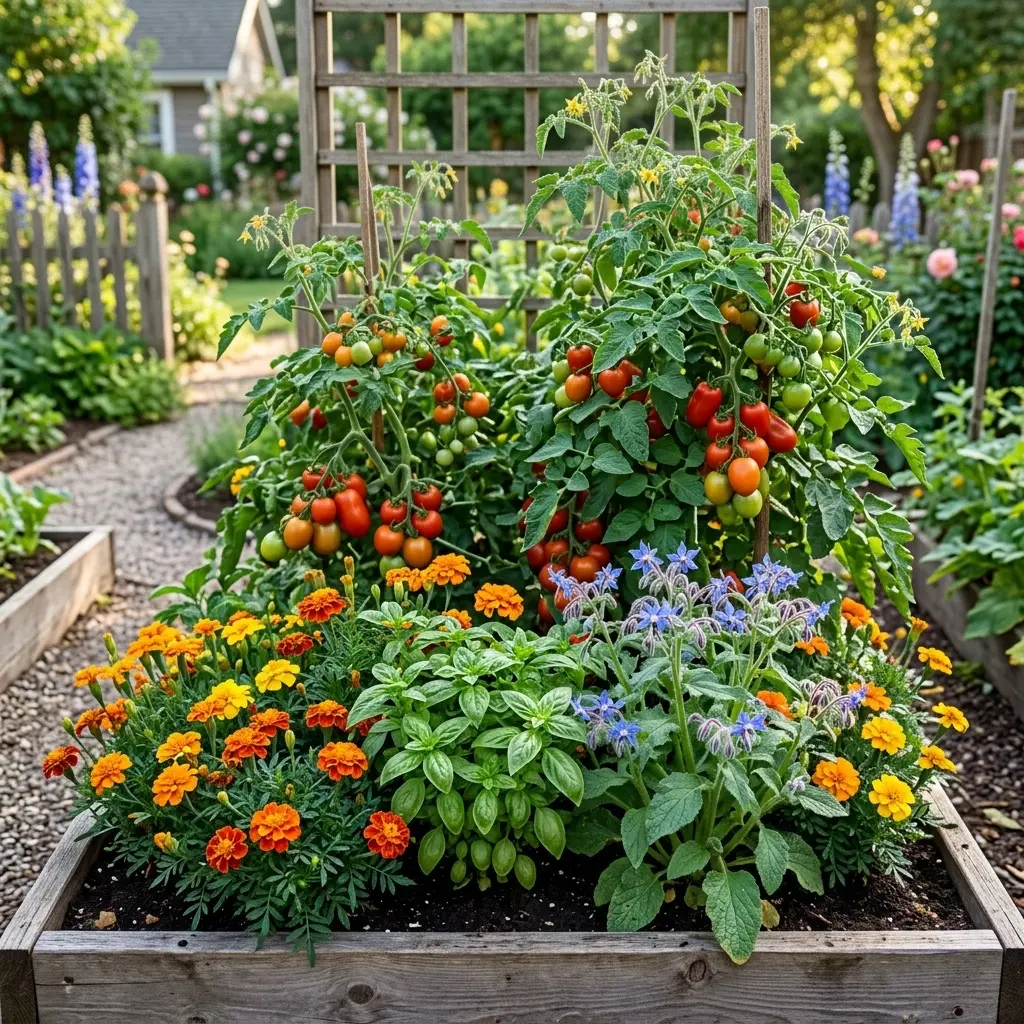
If your plants do flower but the flowers fall off without setting fruit, that’s blossom drop, not a flowering failure. It’s usually heat stress, cold, water stress, or poor pollination. Shake the flowering trusses gently at midday to help pollination, keep watering even, and shade during heat waves. Planting companion plants for tomatoes like basil and borage brings in pollinators too.
Quick diagnosis checklist
- Big, green, leafy, no flowers? → too much nitrogen — stop feeding it
- Leggy, leaning, shaded? → not enough sun — relocate or prune
- Heat wave or cold snap? → wait it out, shade in heat
- Small and young? → be patient, it’s not ready yet
- Soil swinging wet-to-dry? → water deeply and consistently
- Feeding often? → cut back; use a bloom/tomato feed only
Bottom line: Nine times out of ten, a tomato that won’t flower is getting too much nitrogen — back off the feed, switch to a high-phosphorus bloom fertilizer, and make sure it’s in full sun with steady water. Fix those three and the flowers (and tomatoes) will come.
Frequently asked questions
Why are my tomato plants growing big but not flowering?
The most common cause is too much nitrogen. A lush, leafy, dark-green tomato plant with no flowers is almost always getting too much nitrogen from rich soil or a high-nitrogen fertilizer, which pushes leaf growth at the expense of flowers. Switch to a low-nitrogen, higher-phosphorus feed (a 'bloom' or tomato fertilizer) and stop adding nitrogen, and flowers usually follow within a couple of weeks.
What temperature stops tomatoes from flowering?
Tomatoes flower best between about 55°F and 85°F. When daytime temperatures stay above 90°F or nights stay above 70°F, plants often drop their flower buds before they open or fail to set new ones. Early in the season, nights below 55°F also stall flowering. In both cases the fix is time — flowering resumes once temperatures return to that comfortable range.
How much sun do tomatoes need to flower?
At least 6 to 8 hours of direct sun a day, and more is better. Tomatoes are full-sun plants, and in too much shade they put out leaves but few or no flowers. If your plants are leggy, leaning toward the light, and not blooming, shade is likely the problem. Move containers to a sunnier spot, or prune back anything overshadowing an in-ground bed.
How long does it take for tomato plants to flower?
Most tomatoes start flowering about 5 to 7 weeks after transplanting, once the plant reaches a mature size. Early determinate varieties flower sooner; large indeterminate types take longer. If your plant is still small and young, it may simply not be ready yet — be patient, keep it in full sun, and avoid overfeeding with nitrogen while it grows.
Should I use fertilizer to make tomatoes flower?
Use a low-nitrogen, high-phosphorus fertilizer — the middle number on the label should be equal to or higher than the first. Phosphorus supports flowering and fruiting, while excess nitrogen suppresses flowers in favor of leaves. A fertilizer labeled for tomatoes or 'bloom booster' works well. Avoid general lawn or all-purpose high-nitrogen feeds while you're waiting for flowers.
My tomatoes flower but the flowers fall off — what's wrong?
That's blossom drop, which is different from not flowering at all. It's usually caused by heat stress (days over 90°F or nights over 70°F), cold snaps, water stress, or poor pollination. Keep watering consistent, shade plants during heat waves, and gently shake flowering trusses midday to help pollination. Flowers that drop will be replaced once conditions improve.