By Azura · Updated June 2026 · Raised Garden Hub is reader-supported. When you buy through links on our site, we may earn an affiliate commission at no extra cost to you.
That white, powdery dust on your zucchini and squash leaves is powdery mildew — a fungal disease, not dirt or a watering problem. It spreads fast in warm days and humid nights, and while it rarely kills a healthy plant outright, it shrinks your harvest. The good news: caught early, it’s one of the most treatable garden diseases, and a few habits stop it from coming back.
Quick rule: Treat at the first white spot, not when half the plant is coated. Powdery mildew is far easier to stop than to reverse.
How to identify powdery mildew
Powdery mildew is unmistakable once you know it:
- White-to-gray powdery patches on the upper surface of leaves, like someone dusted them with flour
- Starts as small round spots, then spreads to cover whole leaves
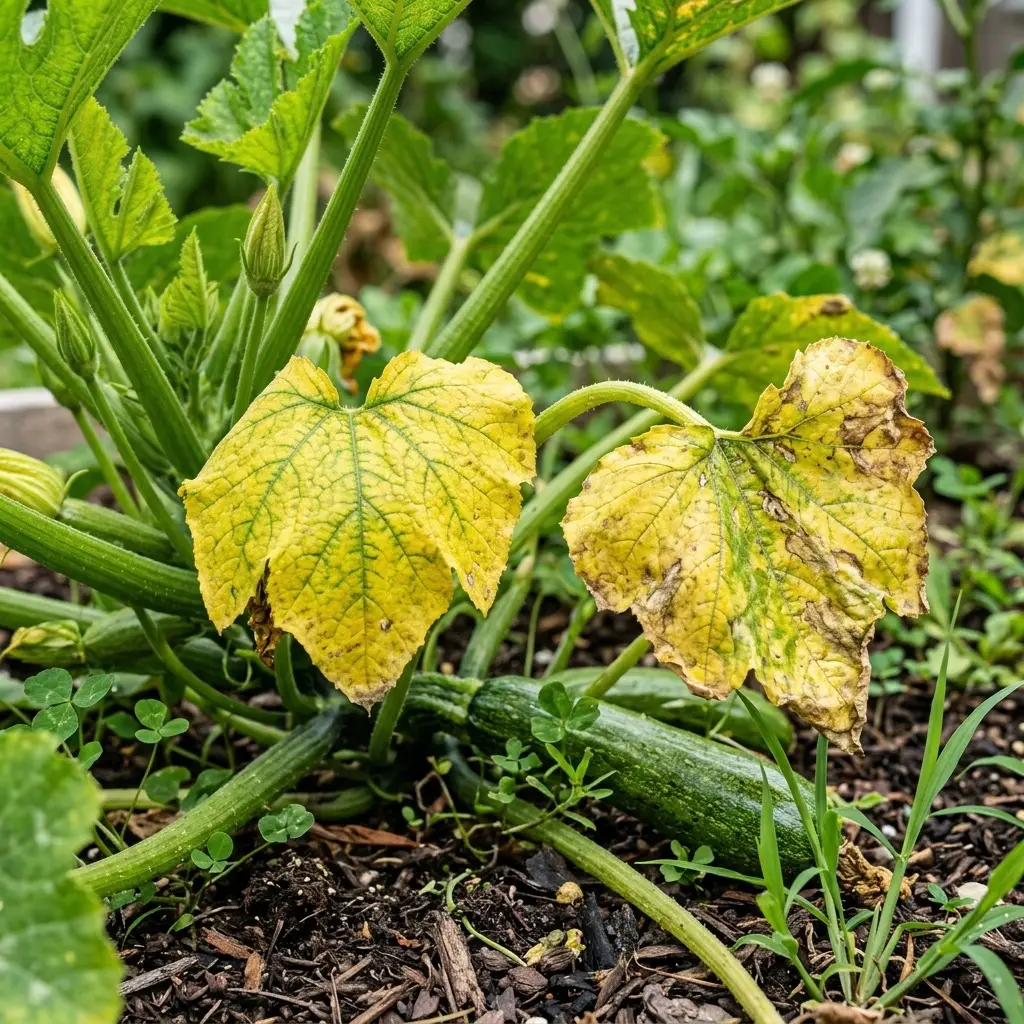
- Affected leaves eventually yellow, dry out, and turn brown
- Shows up first on older, lower, shaded leaves and on the squash’s big leaves where airflow is poorest
Don’t confuse it with the natural silvery-white variegation many zucchini and squash varieties have along their leaf veins — that’s a normal genetic pattern, not disease. Mildew is a surface powder you can partly rub off; variegation is in the leaf itself. If your leaves are yellowing without the powder, work through the 8 causes of yellow zucchini leaves instead.
What causes it
Powdery mildew fungi thrive in a specific combination most home gardens hit every summer:
- Warm days (60–80°F) and cool, humid nights — the classic trigger
- Crowded plants with poor air circulation (squash leaves are huge and trap moisture)
- Shade — plants getting less than 6 hours of sun are more prone
- Stressed plants — drought-stressed or under-fed plants resist disease poorly
Unlike most fungi, powdery mildew doesn’t need wet leaves to germinate — which is why it shows up even in dry spells. It overwinters on plant debris and blows in on the wind, so even a spotless bed can get infected from a neighbor’s garden.
How to treat powdery mildew (what actually works)
Start the moment you see the first spots. Work top to bottom:
1. Remove the worst leaves first
Cut off any leaf more than about half covered — it’s no longer pulling its weight and is releasing spores onto the rest of the plant. Cut cleanly at the stem and bin it (don’t toss heavily infected leaves on the compost pile). Don’t strip more than about a third of the plant at once.
2. Spray weekly with a proven solution
Three options, cheapest to strongest:
- Milk spray — 1 part milk to 2–3 parts water. Surprisingly well-supported by research; spray in the morning so sun activates it. Reapply weekly and after rain.
- Potassium bicarbonate (GreenCure, MilStop) — the most effective home-garden option and gentler on soil than baking soda. Follow label rates, spray to cover both leaf surfaces.
- Neem oil — works as both a treatment and mild preventative; also handles squash bugs and other pests. Don’t spray in full midday sun or on heat-stressed plants.
Avoid plain baking soda as your main weapon — it works but builds up sodium in your raised bed soil over time. Whatever you choose, spray in the morning, cover the undersides of leaves, and never spray a wilting plant in the heat of the day.
3. Fix the conditions
Spray treats the symptom; airflow treats the cause. Thin out crowded inner leaves, make sure the plant gets full sun, and water at the soil line — never over the leaves.
How to prevent it next season
Prevention is far easier than treatment, and most of it is free:
- Space plants properly. Crowding is the #1 avoidable cause. Give summer squash and zucchini 24–36 inches each — see the raised bed plant spacing chart for exact numbers.
- Water at the base, in the morning. Drip irrigation or a soaker hose keeps foliage dry and humidity down.
- Grow in full sun. Six-plus hours daily; mildew loves shade.
- Choose resistant varieties. Many modern zucchini and squash seeds are bred for powdery mildew resistance (look for “PM” or “PMR” on the packet).
- Clean up in fall. Remove and bin old squash vines and leaves — spores overwinter on debris.
- Rotate. Don’t plant squash in the same spot two years running. Raised beds make rotation easy because each bed is a defined zone — plan it when you decide what to plant and when.
- Keep plants strong. A well-fed plant in good raised bed soil shrugs off mildew far better than a stressed one.
When to give up on a plant
Late in the season, a heavily infected plant near the end of its productive life usually isn’t worth saving. If it’s August, the plant has already given you most of its harvest, and the mildew is everywhere, pull it, clean up the debris, and protect the rest of your bed instead. Removing a spore source protects your healthier plants — and a clean fall cleanup is your best defense against a repeat next year.
Frequently asked questions
How do I get rid of powdery mildew on squash naturally?
Spray affected leaves weekly with a milk solution (1 part milk to 2–3 parts water) or a potassium bicarbonate spray, both proven in trials. Remove the worst leaves first, water at the soil line only, and improve airflow by thinning crowded foliage. Treat early — once mildew coats most of a leaf, that leaf won't recover and should be removed.
Does baking soda kill powdery mildew?
Baking soda (sodium bicarbonate) can suppress powdery mildew but is weaker than potassium bicarbonate and can build up sodium in the soil. Mix 1 teaspoon baking soda + a few drops of liquid soap per quart of water, spray weekly, and avoid using it in hot sun. Potassium bicarbonate products (like GreenCure or MilStop) work better and are kinder to soil.
Can a plant recover from powdery mildew?
Yes, if you catch it early. Powdery mildew rarely kills an established squash plant outright, but heavy infection reduces photosynthesis, weakens the plant, and cuts your harvest. Remove the worst leaves, start a weekly spray, and new growth usually comes in clean. Late-season plants near the end of their life are often not worth treating.
Should I remove leaves with powdery mildew?
Remove any leaf that is more than about half covered — it can no longer photosynthesize well and is a spore factory. Cut it cleanly at the stem and bin it (don't compost heavily infected leaves). Leave lightly spotted leaves on and treat them with spray, since stripping too much foliage at once stresses the plant and exposes fruit to sunscald.
Why does my zucchini get powdery mildew every year?
Powdery mildew spores overwinter on plant debris and travel on the wind, so it returns whenever conditions favor it: warm days, cool nights, high humidity, crowded plants, and shade. Reduce the odds by spacing plants properly, watering at the soil line in the morning, cleaning up old vines in fall, rotating where you plant squash, and choosing mildew-resistant varieties.
Is powdery mildew on squash harmful to eat?
The squash itself is safe to eat — powdery mildew grows on leaves and stems, not usually on the fruit, and it isn't toxic to humans. Just wash the squash before eating. The real cost is to the plant: mildew-weakened plants produce smaller, fewer fruits, so treating it protects your harvest, not your health.
What's the difference between powdery mildew and downy mildew?
Powdery mildew looks like white or gray powder dusted on the top of leaves and thrives in warm, dry-to-humid conditions. Downy mildew appears as yellow angular blotches on top with fuzzy gray-purple growth on the underside, and it needs cool, wet conditions. They're different organisms and downy mildew is harder to control, so identify correctly before spraying.