By Azura · Updated June 2026 · Raised Garden Hub is reader-supported. When you buy through links on our site, we may earn an affiliate commission at no extra cost to you.
To get rid of squash bugs: hand-pick the adults, crush the bronze egg clusters on leaf undersides daily, and knock nymphs into soapy water. They spread fast and can kill a zucchini or squash plant in a matter of weeks, so early, daily action is what works — not waiting for a spray to save you. Here’s the complete plan.
Identify them first
Getting the ID right matters because squash bugs are often confused with stink bugs, and the control tactics differ.
- Adults: flat, shield-shaped, grey-brown bugs about ⅝ inch long with orange and brown stripes on the edges of their abdomen. They emit a foul odor when crushed.
- Eggs: shiny bronze to reddish-brown ovals arranged in neat, grid-like clusters, almost always on the undersides of leaves in the angles between leaf veins. Clusters hold 15 to 40 eggs.
- Nymphs: newly hatched nymphs are pale green with dark legs. As they mature they turn grey with black legs. They cluster together in groups, especially near stems.
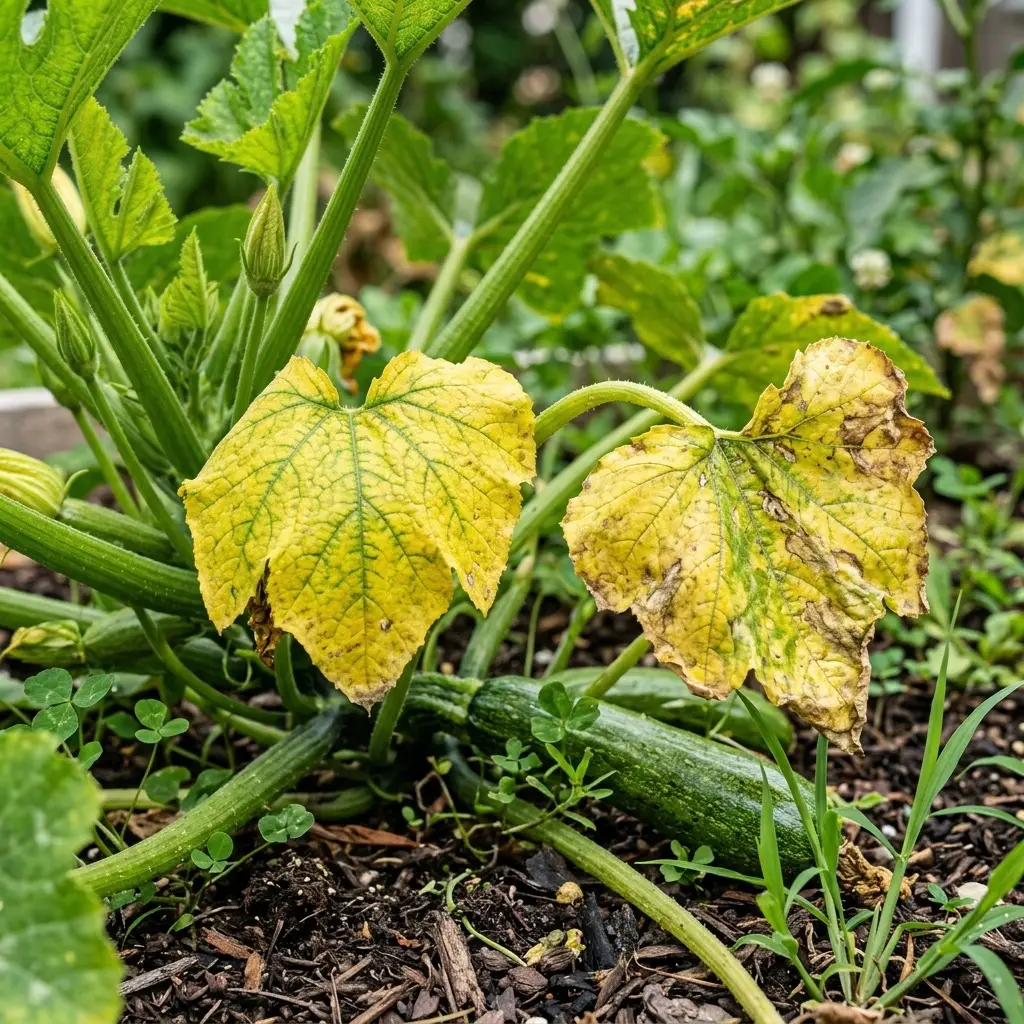
- Damage: yellow, wilting leaves that turn brown and crispy — the same symptoms you see with zucchini leaves turning yellow from other causes. Squash bugs inject a toxin as they feed that blocks the flow of water and nutrients through the plant. Heavy infestations can collapse a vine in a week.
If your whole plant wilts suddenly rather than leaf by leaf, check the crown and lower stems for squash bugs hiding under soil and debris.
Squash bugs are not the same as stink bugs, even though both smell bad when crushed. Stink bugs are broader and more shield-shaped and feed on dozens of plant species. Squash bugs are specialists — they zero in on cucurbits like squash, zucchini, pumpkins, and cucumbers.
How to get rid of squash bugs
Manual removal (your highest-impact tool)
No spray matches consistent hand-removal when it comes to actually reducing the population.
- Hand-pick daily. Go out every morning and drop adults and nymphs into a jar of soapy water. The soap breaks the surface tension so they sink and drown. This works on every life stage.
- Destroy the eggs first. Slide a butter knife or piece of duct tape under egg clusters and scrape them off the leaf. Fold the tape back on itself so they can’t escape. Smash what you can directly. Egg removal is the single highest-impact step you can take because each cluster you destroy eliminates 15 to 40 future bugs.
- The board trap. Lay a flat board, piece of cardboard, or a few sheets of newspaper near the plants at dusk. Squash bugs are attracted to dark, damp hiding spots and will congregate underneath overnight. Flip the board at dawn and knock everything into your soapy water jar. This is especially useful when the population is high.
Organic sprays
Sprays are a supplement to manual removal, not a replacement. They work best on young nymphs.
- Neem oil: dilute according to package directions and spray the undersides of leaves in the evening. Neem disrupts insect hormone systems and kills soft-bodied nymphs on contact. Reapply every 5 to 7 days and after rain. It has very limited effect on adults.
- Insecticidal soap: kills nymphs on contact by disrupting their outer membranes. Spray directly on bugs — it has no residual effect once it dries. Use on first and second instar nymphs (the small ones) for best results.
- Kaolin clay: a physical barrier spray that coats leaves and makes them harder for adults to feed and lay eggs on. It needs to be reapplied frequently and is more useful as a preventive tool than a knockdown treatment.
The honest limitation of organic sprays: squash bug adults develop a thick, waxy cuticle that makes them nearly impervious to most contact insecticides, including neem and soap. Manual removal is more effective on adults than any spray.
When chemical control is justified
If you’ve had a plant completely collapse despite daily scouting and hand-removal, a conventional insecticide may be warranted to save what’s left of the season.
- Pyrethrin-based sprays (derived from chrysanthemum flowers) kill on contact and break down quickly. Apply in evening to reduce pollinator exposure.
- Spinosad is a naturally derived insecticide that is more effective on nymphs than adults. It is OMRI listed for organic use.
Conventional synthetic options like permethrin exist but harm beneficial insects significantly, including bees. Save them as a last resort and apply only in the evening when flowers are closed. Never spray when bees are actively visiting your squash blossoms, or you will eliminate your pollinators along with the pest — and squash will not set fruit without pollination.
How to prevent squash bugs next year
Controlling the population before it establishes is far easier than fighting an infestation midseason. If you’re starting a new bed, the raised bed gardening for beginners guide covers setup decisions — like bed placement and soil — that affect how easy your plants are to manage overall.
Row covers
Use floating row covers immediately after transplanting or direct seeding. Row covers create a physical barrier that prevents adults from accessing your plants to lay eggs. You must remove them once your squash begins flowering so that bees can pollinate. Check your local planting calendar so you know exactly when to transplant and when flowering typically begins in your area.
Crop rotation
Move your squash and zucchini to a different raised bed every year. Squash bugs overwinter nearby and emerge close to where they fed the previous season. Rotation forces them to travel further to find a host, which reduces early-season pressure. Pair this with good weed control to eliminate additional overwintering habitat around your beds.
Fall cleanup
After your squash plants finish for the season, remove all plant debris immediately — don’t let it sit in the bed or compost pile nearby. Adults shelter under leaves, stems, and mulch to survive winter. Clearing the bed thoroughly in fall reduces the overwintering population that will come after you next spring.
Resistant varieties
Some squash varieties tolerate squash bugs better than others, though none are fully immune. Butternut squash generally performs better than zucchini or acorn squash under squash bug pressure. Blue Hubbard is often used as a trap crop — plant a few away from your main bed to draw bugs in, then destroy the trap plants.
Scout twice a week
Flip leaves and check the undersides for egg clusters starting in late spring and continuing through midsummer when egg-laying peaks. Two inspections per week is the cadence that lets you catch eggs before they hatch. Once nymphs disperse from the cluster into your canopy, removal becomes exponentially harder.
Companion planting deterrents
Some companion plants are reported to reduce squash bug pressure, though the evidence is largely observational rather than rigorously controlled. Still, these plants have other benefits and are worth including near your squash:
- Nasturtiums — often used as a trap crop and may deter some pests. They attract aphids away from squash and are edible.
- Marigolds — strong-smelling varieties like African marigolds may confuse pest insects trying to locate host plants.
- Dill and fennel — attract beneficial predatory insects like parasitic wasps that attack squash bug eggs.
- Catnip — contains nepetalactone, which has repellent properties against some insects.
For a broader look at how companion planting fits into a raised bed, see our guide to companion plants for tomatoes — many of the same principles apply across your vegetable beds.
The bottom line
Squash bugs reward daily vigilance more than any product you can spray. The cycle is simple: check plants every morning, destroy any egg clusters you find, drop adults and nymphs in soapy water, and set board traps overnight when numbers are high. Use neem oil or insecticidal soap to back up manual control on young nymphs.
The same plants that attract squash bugs — zucchini, cucumbers, summer squash — are prone to other problems too. If you’re seeing cucumber leaves turning yellow alongside a squash bug infestation, you may be dealing with a compound stress issue that’s worth addressing at the soil level. Start with the best soil mix for raised garden beds if your plants consistently underperform even with good pest management in place.
Frequently asked questions
How do I get rid of squash bugs?
Hand-pick adults and crush the bronze egg clusters on leaf undersides daily, knock nymphs into soapy water, lay a board overnight to trap adults underneath, and use neem oil on young nymphs. Persistence is key — check plants every day during the season.
What do squash bugs look like?
Adults are flat, shield-shaped, grey-brown bugs about ⅝ inch long. Eggs are shiny bronze ovals laid in neat clusters on the undersides of leaves. Young nymphs are grey with black legs and cluster together.
How do I prevent squash bugs?
Use row covers until flowering, clean up plant debris in fall where they overwinter, rotate squash to a different bed each year, and check leaf undersides for eggs twice a week so you can destroy them before they hatch.
What kills squash bugs instantly?
Nothing truly kills them instantly, but dropping adults and nymphs into a jar of soapy water kills them within minutes. Insecticidal soap spray works quickly on soft-bodied young nymphs. Adults have a thick, waxy cuticle that makes most sprays far less effective on them.
Are squash bugs the same as stink bugs?
No. They are different insects. Squash bugs (Anasa tristis) are flatter and more elongated, grey-brown, and primarily attack cucurbits like squash and zucchini. Stink bugs are wider and more shield-shaped and feed on a much broader range of plants. Both emit an unpleasant odor when crushed, which causes the confusion.
Do squash bugs come back every year?
Yes. Adult squash bugs overwinter in garden debris, under boards, and in mulch, then emerge in spring to lay eggs on new squash plants. Removing all plant debris and dead leaves in fall reduces but rarely eliminates the overwintering population.
What do squash bug eggs look like?
Squash bug eggs are small, shiny, bronze to reddish-brown ovals. They are always laid in neat clusters, usually in the angles between leaf veins on the underside of leaves. A cluster typically holds 15 to 40 eggs arranged in a tidy grid pattern.
Will neem oil kill squash bugs?
Neem oil is most effective on very young nymphs (first and second instar). It disrupts their development and can kill soft-bodied juveniles on contact. It is much less effective on older nymphs and nearly useless on armored adults. Apply in the evening to avoid harming pollinators and reapply after rain.